
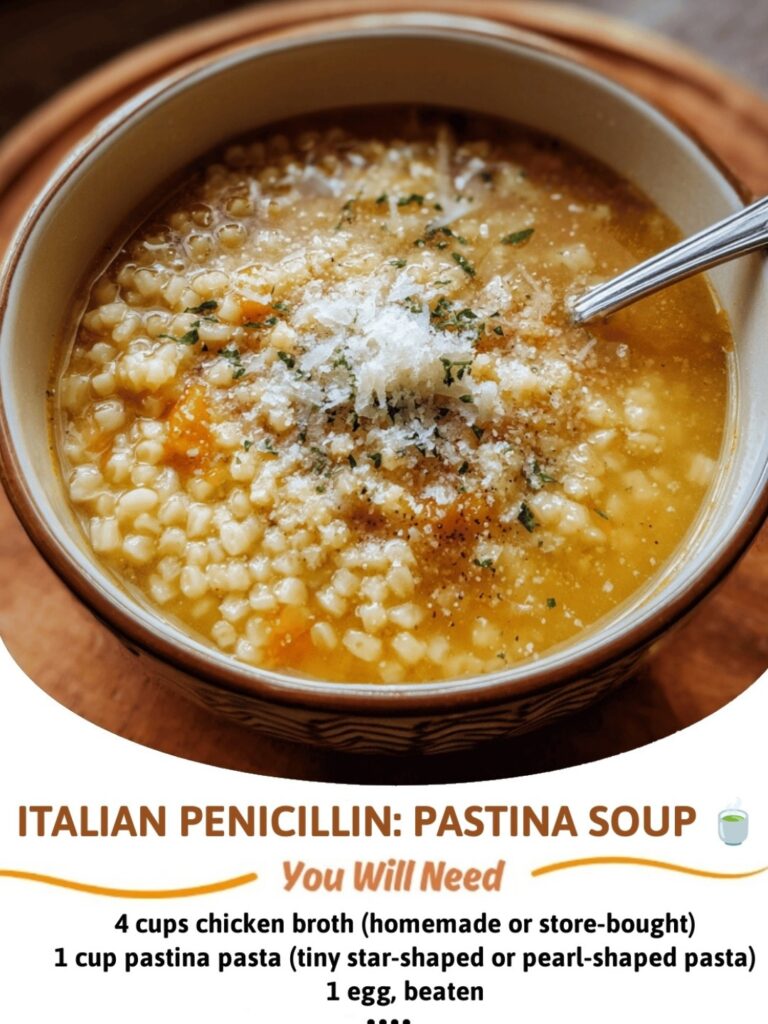
Italian Penicillin: Pastina Soup has earned its affectionate nickname for a reason. This gentle, nourishing soup has been served in Italian homes for generations whenever someone needed warmth, comfort, or a little extra care. With tiny pasta stars floating in savory broth, tender vegetables, and a bright touch of lemon, this soup feels soothing without ever being bland.
Because it is light yet satisfying, Italian Penicillin: Pastina Soup works beautifully as a simple meal, a starter, or a restorative dish when appetites are low. It comes together quickly, relies on basic ingredients, and delivers flavor that feels both familiar and calming. Whether you are feeling under the weather or simply craving something cozy, this soup offers comfort in every spoonful.
I grew up associating this soup with quiet moments and gentle care. Whenever someone in the house had a cold or felt run down, a pot of pastina soup would quietly simmer on the stove. It was never rushed or overcomplicated. The kitchen would smell of onions and garlic softening in olive oil, and the broth would gently bubble as the tiny pasta cooked. Sitting at the table with a warm bowl felt grounding and reassuring. Even now, making Italian Penicillin: Pastina Soup brings back that same sense of calm and care, reminding me that sometimes the simplest food brings the most comfort.
Ingredients
Equipment
Method
- Chop onion, carrots, celery, and mince garlic.
- Sauté onion, carrots, and celery in olive oil until softened. Add garlic and cook briefly.
- Add broth and water, bring to a boil, then reduce to a simmer.
- Stir in pastina and cook until tender. Add greens during last few minutes.
- Finish with lemon zest, lemon juice, oregano, salt, and pepper. Serve hot.
Nutrition
Notes
Tried this recipe?
Let us know how it was!Why Italian Penicillin: Pastina Soup Is So Comforting
A Soup Designed to Be Gentle and Nourishing
Italian Penicillin: Pastina Soup stands out because it is intentionally mild and soothing. The broth forms a clean, savory base that hydrates and warms without overwhelming the palate. Because the pasta is so small, it cooks quickly and becomes easy to eat, even when energy is low.
The vegetables soften fully, adding natural sweetness and nutrients. Carrots and celery provide subtle flavor and texture, while onion builds depth without heaviness. Garlic adds warmth and aroma, but it never dominates the dish.
This balance makes the soup feel restorative rather than filling in a heavy way. It comforts without tiring you out, which is why it is often served when someone needs rest and nourishment.
Why Pastina Makes All the Difference
Pastina, which means “little pasta,” is the heart of this soup. Its tiny star shape or similarly small size creates a texture that feels almost creamy as it cooks in the broth. Unlike larger pasta, pastina blends seamlessly into the soup.
Because it absorbs flavor so easily, every bite tastes like the broth itself. This creates a cohesive dish where nothing feels separate or distracting. The pasta becomes part of the soup rather than an add-in.
This quality is what makes Italian Penicillin: Pastina Soup feel so comforting. The texture stays soft, the flavors stay gentle, and the experience feels soothing from start to finish.
Ingredients That Create Simple, Healing Flavor
Everyday Vegetables With Purpose
The vegetables in Italian Penicillin: Pastina Soup may seem basic, but each plays a role. Onion adds sweetness and depth once softened. Carrots contribute color and gentle earthiness. Celery brings balance and a clean background flavor.
Because the vegetables are finely chopped, they cook quickly and distribute evenly throughout the soup. This ensures that each spoonful contains a bit of everything, rather than large chunks that dominate the bowl.
Optional leafy greens like spinach or kale add freshness and extra nutrition. They wilt quickly and blend naturally into the soup without changing its comforting character.
Broth, Lemon, and Finishing Touches
Chicken broth provides richness and body, while water keeps the soup light. This combination prevents the broth from feeling too heavy while still delivering savory flavor. For a vegetarian version, vegetable broth works just as well.
Lemon zest and juice add brightness that lifts the entire soup. This small addition prevents the flavors from feeling flat and adds a fresh note that balances the warmth of the broth.
Cheese, whether Parmesan or mozzarella, is optional but traditional. It melts gently into the hot soup, adding richness and depth. A sprinkle of fresh parsley at the end adds color and a clean finish.
Step-by-Step Guide to Italian Penicillin: Pastina Soup
Building Flavor From the Start
Begin by preparing all vegetables so the cooking process flows smoothly. Finely chop the onion, dice the carrots and celery, and mince the garlic. This ensures even cooking and balanced flavor.
Heat olive oil in a large pot over medium heat. Add the onion, carrots, and celery, stirring occasionally. Cook until the vegetables soften and release their aroma. This step builds the foundation of the soup.
Add the garlic and cook briefly until fragrant. Because garlic cooks quickly, it should only stay in the pot long enough to release its aroma without browning.
Simmering and Cooking the Pastina
Pour in the chicken broth and water, then bring the mixture to a gentle boil. Once boiling, reduce the heat and allow it to simmer. This step allows the flavors to blend before adding the pasta.
Stir in the pastina and cook according to package instructions. Because pastina is very small, it cooks quickly and should be stirred occasionally to prevent sticking.
If using spinach or kale, add it during the last few minutes of cooking. The greens will wilt gently and retain their color and nutrients.
Finish by stirring in lemon zest, lemon juice, oregano, salt, and pepper. Taste and adjust seasoning as needed. Serve hot with cheese and parsley if desired.
Tips, Variations, and Storage Ideas
Easy Ways to Adapt the Soup
Italian Penicillin: Pastina Soup adapts easily to different needs. For added protein, shredded cooked chicken can be stirred in near the end of cooking. For extra richness, a beaten egg can be slowly drizzled into the simmering soup while stirring, creating delicate strands.
If pastina is unavailable, other small pasta shapes like orzo or ditalini work well. The key is keeping the pasta small so the soup maintains its signature texture.
Herbs can be adjusted based on preference. Fresh oregano, thyme, or even a bay leaf during simmering add subtle variation without overpowering the soup.
Storing and Reheating Properly
Pastina continues to absorb liquid as it sits. For leftovers, you may want to add a splash of broth or water when reheating to loosen the texture.
Store the soup in an airtight container in the refrigerator for up to three days. Reheat gently on the stove, stirring frequently to maintain even texture.
If freezing, consider cooking the pasta separately and adding it when reheating. This prevents the pasta from becoming overly soft.
Frequently Asked Questions
Is Italian Penicillin: Pastina Soup good when you are sick?
Yes, it is light, hydrating, and easy to digest.
Can I make this soup vegetarian?
Yes, simply use vegetable broth instead of chicken broth.
What if I cannot find pastina?
Small pasta shapes like orzo or ditalini work well.
Does lemon change the flavor a lot?
It adds brightness without making the soup taste sour.
Can I add cheese directly to the pot?
Yes, but adding it to individual bowls allows better control.
Conclusion
Italian Penicillin: Pastina Soup proves that comfort does not require complexity. With gentle flavors, simple ingredients, and a soothing texture, it delivers warmth and nourishment in the most reassuring way. Whether served during cold season or enjoyed as a cozy meal, this soup continues to offer care and comfort, one bowl at a time.

Leave a Reply