
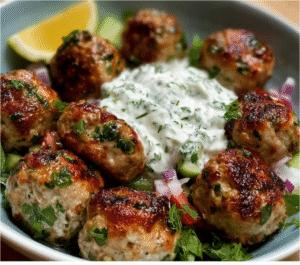
Greek Chicken Meatballs with Tzatziki bring tender, lemon-bright meatballs together with cool, creamy cucumber sauce for a dish that feels light, fresh, and deeply comforting. Because the recipe uses chicken thighs and delicate herbs, the meatballs stay soft while still holding their shape. The first time I tasted these, I understood why they stayed in my family for generations. My grandmother Yiayia Eleni made them in her Astoria kitchen after arriving from Greece with only a small grater, oregano seeds, and fierce determination. She fed ten children with simple ingredients that stretched into feasts, and these meatballs appeared at celebrations, winter evenings, and moments when we needed comfort most. Each batch carries her strength, and each bite echoes the warmth she offered to everyone at her table.
Ingredients
Equipment
Method
- Grate cucumber and squeeze thoroughly until no moisture drips.
- Combine chicken, breadcrumbs, onion, garlic, herbs, lemon zest and juice, egg, salt, and pepper. Fold gently and rest 10 minutes.
- Shape mixture into 1-inch balls and place on parchment-lined sheet.
- Heat olive oil until shimmering and sear meatballs 2–3 minutes per side. Cool 5 minutes.
- Mix yogurt, cucumber, garlic, lemon juice, dill, mint, salt, and pepper. Drizzle with olive oil and refrigerate.
- Serve warm meatballs with chilled tzatziki and garnish with herbs and lemon wedges.
Nutrition
Notes
Tried this recipe?
Let us know how it was!What Makes These Meatballs Exceptional
The Secret to Tender Chicken Meatballs
Greek Chicken Meatballs with Tzatziki remain tender because they rely on chicken thighs for moisture. Thigh meat contains enough natural fat to stay juicy during baking and searing, avoiding the dryness often associated with poultry. Toasted breadcrumbs add structure without heaviness, absorbing just the right amount of liquid from lemon juice and onion. Fresh herbs brighten the mixture, while gentle folding prevents overworking the meat. When shaped into small balls, the mixture cooks evenly, forming crisp edges with soft centers. These techniques ensure consistent texture every time.
How Lemon and Herbs Build Flavor
Lemon zest and juice bring brightness that cuts through the richness of the meat. Oregano, dill, and parsley create distinctly Greek character, grounding the meatballs in Mediterranean flavor. Crushing oregano in the palm releases aromatics that pre-ground versions often lack. Onion, soaked briefly in water, loses harshness and blends smoothly into the mixture. When these ingredients meet warm olive oil during searing, the meatballs’ surface develops notes of caramelized herbs and citrus. This harmony makes the dish feel refreshing yet hearty.
Mastering Tzatziki for Perfect Balance
Achieving the Right Texture
Tzatziki makes Greek Chicken Meatballs with Tzatziki complete, providing cool contrast against warm meat. The key is preparing cucumbers properly. Grating and squeezing removes excess liquid, preventing watery sauce. Full-fat yogurt adds body and tang, while dill and mint offer fresh, delicate flavor. Garlic brightens the dressing, and a small amount of lemon juice balances richness. When everything rests in the refrigerator, the flavors blend into a thick, silky sauce that clings beautifully to the meatballs. This texture is essential to achieving the classic pairing.
Fresh Ingredients Make the Difference
Using fresh herbs and high-quality yogurt elevates tzatziki from simple to exceptional. Persian cucumbers provide crispness without contributing excess moisture. Full-fat Greek yogurt ensures creaminess. Olive oil adds slight richness and sheen. When spooned over warm chicken meatballs, the sauce softens slightly and coats each bite evenly. The contrast between hot and cold, rich and refreshing, creates the signature experience people love about this dish.
Serving, Storing, and Enjoying Greek Chicken Meatballs with Tzatziki
Serving Them at Their Best
Greek Chicken Meatballs with Tzatziki taste best when served warm with chilled tzatziki. This contrast highlights the lemony herbs in the meatballs and the cool freshness of the sauce. A squeeze of lemon and a sprinkle of dill provide vivid color and aroma. These meatballs pair naturally with warm pita, fresh salads, or roasted vegetables. Because the recipe scales easily, it works for gatherings or weeknight meals. Their soft texture and bright flavors make them appealing to both new cooks and seasoned home chefs.
Storage and Leftovers
To preserve freshness, store meatballs and tzatziki separately. When refrigerated, the flavors intensify slightly, giving leftovers deeper character. Rewarming the meatballs gently helps maintain their tenderness. Adding a splash of broth while reheating keeps them moist. The tzatziki thickens slightly overnight and tastes even more balanced. These qualities make the dish excellent for meal prep or next-day lunches. The flavors continue to shine without losing texture.
Variations and Cultural Notes
Flexible Ingredient Swaps
Greek Chicken Meatballs with Tzatziki adapt well to different kitchens. Sheep’s milk yogurt replaces Greek yogurt for traditional flavor, while marjoram or thyme provide herbal depth when Greek oregano is unavailable. Zucchini, squeezed dry like cucumber, works well in tzatziki during summer. Lemon essential oil substitutes for resinous notes when mastiha is unavailable. These variations maintain the recipe’s foundation while allowing cooks to use what they have on hand.
A Recipe Rooted in Resilience
This dish reflects a long history of resourceful cuisine shaped by migration and family survival. After fleeing the Greek Civil War, my grandmother rebuilt her life in a small New York apartment. She stretched chicken, herbs, and yogurt into meals that brought joy to her family and neighbors. People gathered around her table not only for food but for a sense of community. Today, Greek Chicken Meatballs with Tzatziki continue that legacy, offering comfort and a reminder that simple ingredients can create something meaningful.
FAQ
Why did my tzatziki become watery?
The cucumber likely held too much moisture. Squeeze it until no liquid drips before mixing.
Can I use ground turkey instead of chicken?
Turkey tends to dry out. Chicken thighs provide better texture and moisture.
Why do meatballs become tough?
Overmixing compresses the mixture. Fold gently and stop once ingredients are combined.
Can I prepare meatballs ahead of time?
Yes. Shape them a day ahead and store chilled. Sear just before serving.
Why is full-fat yogurt important?
Low-fat yogurt separates and becomes watery. Full-fat maintains creaminess.
Conclusion
Greek Chicken Meatballs with Tzatziki combine bright herbs, tender chicken, and cool cucumber sauce into a dish filled with freshness and comfort. Through straightforward techniques and wholesome ingredients, they deliver flavor that feels both traditional and timeless. Whether served at a family gathering or enjoyed as a simple weeknight meal, these meatballs offer warmth, nourishment, and a connection to the kitchens that inspired them.
Leave a Reply