
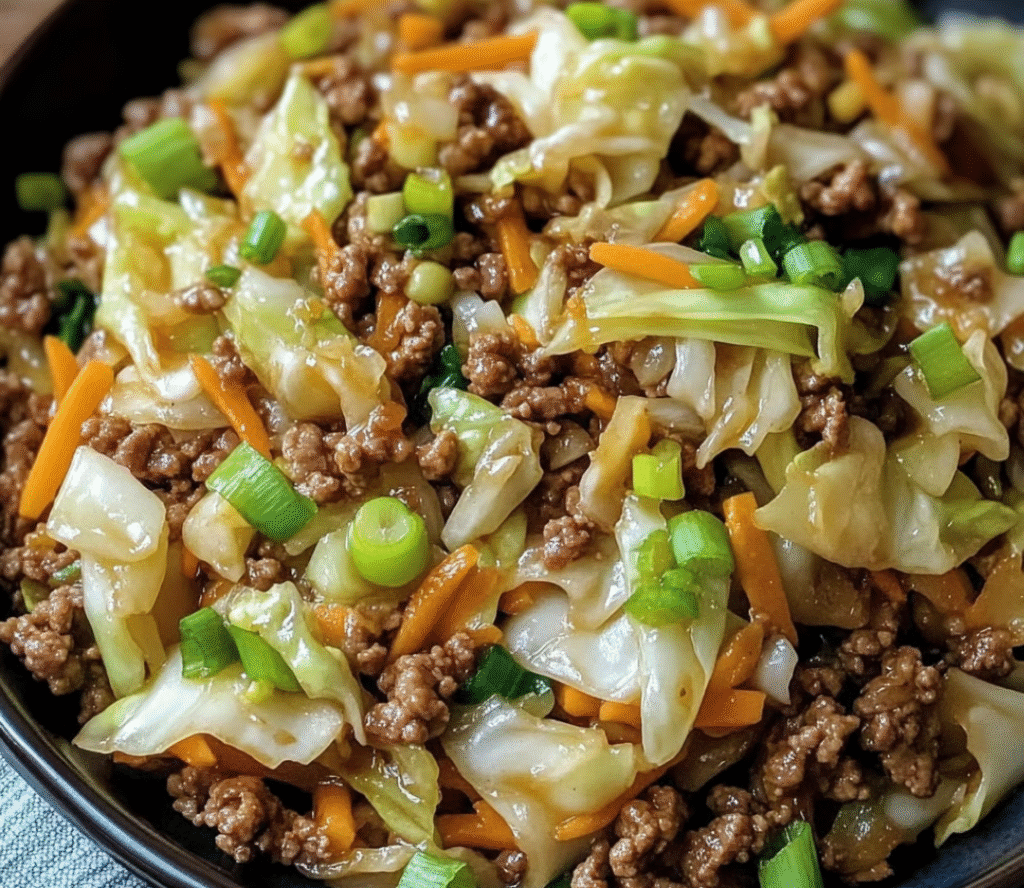
Cloud-soft Napa cabbage bathed in amber soy silk, cradling ruby beef confetti, is a dish that balances texture, flavor, and history in every bite. This Healthy Chinese Ground Beef Cabbage recipe brings together tender-crisp cabbage, savory ground beef, and a perfectly balanced sauce for a quick, nourishing meal. Perfect for beginners, this stir-fry delivers rich Cantonese-American flavors in just 25 minutes, making it an everyday winner for family dinners or special occasions.
I still remember my grandmother, Nǎinai Mei, preparing this dish in her tiny 1952 Chinatown kitchen. After soldiers seized our farm, she transformed a simple head of Napa cabbage into a meal that fed hungry railroad workers and kept our family nourished. Her hands moved with precision, slicing cabbage thinly, browning beef just right, and stirring in sauces until they clung perfectly. Eating this dish today is like tasting resilience, love, and the warmth of a home that never gave up.
Mastering the Cabbage
Ingredients
Equipment
Method
- Heat carbon steel wok until smoking hot. Swirl in sesame oil and remove from heat.
- Add chilled beef and break into pea-sized pieces. Cook 1 minute until pink remains. Remove and drain all but 1 tsp fat.
- Heat reserved fat until smoking hot. Add garlic and ginger, stir 15 sec. Add carrots and stir 1 min. Add cabbage and stir 2-3 mins. Stir in soy sauce, rice vinegar, oyster sauce, and chinkiang vinegar. Scrape all fond. Add cornstarch slurry and toss 3 strokes until amber sheen.
- Scoop into pre-warmed bowls and garnish with green onions. Serve immediately.
Nutrition
Notes
Tried this recipe?
Let us know how it was!Choosing the Right Cabbage
For this recipe, Napa cabbage is essential. Its soft, tender leaves hold their crunch when stir-fried, unlike green cabbage, which tends to turn mushy. Slice it by hand for the best texture, and soak it in cold salted water for 10 minutes before patting dry. This step prevents sogginess and ensures that each bite has a satisfying snap.
Preparing the Cabbage for Stir-Fry
After soaking, make sure to thoroughly pat the cabbage dry. Wet cabbage will steam rather than sear, losing flavor and texture. Cut the cabbage into uniform strips, about half an inch wide, so it cooks evenly. Keeping the leaves and stems consistent ensures that your stir-fry reaches the perfect tender-crisp balance.
Perfecting the Beef
Selecting and Preparing Ground Beef
Use ground chuck, not lean beef. The extra fat adds flavor and prevents dryness. Keep the beef chilled until you’re ready to cook, as this allows it to brown evenly without turning greasy. Break the meat into pea-sized pieces while cooking; overworking it can lead to a tough texture.
Browning and Draining
Heat a carbon steel wok until it’s smoking hot, then add a splash of toasted sesame oil. Quickly brown the beef for just one minute until pink remains. Remove the beef and drain all but a teaspoon of fat for stir-frying the vegetables. This step ensures maximum flavor without excess grease.
Building the Sauce
Core Sauce Ingredients
Combine soy sauce, oyster sauce, rice vinegar, and a touch of red pepper flakes. These ingredients create a savory, slightly tangy sauce that clings to both beef and cabbage. Nǎinai’s secret touch of chinkiang vinegar adds depth and balances sweetness, creating a complex, rich flavor profile that elevates the stir-fry.
Integrating the Sauce
Once the cabbage and carrots are stir-fried, add the sauce along with any fond from the pan. This step is crucial—those browned bits carry immense flavor. Stir in a cornstarch slurry to give the sauce a glossy sheen and ensure it coats the vegetables and beef evenly. Avoid boiling; a gentle simmer keeps the sauce smooth and silky.
Cooking with Precision
The Wok Hei Technique
The secret to restaurant-quality stir-fry is heat management. Heat your carbon steel wok until smoking hot, then swirl in sesame oil and remove from the heat briefly. Return the wok to the heat when adding aromatics like garlic and ginger. This method maximizes flavor without burning the delicate oils.
Stir-Fry in Layers
Add vegetables in stages: first carrots, then cabbage. Stir each ingredient just long enough to release its natural flavors while retaining crunch. Return the beef to the pan, toss with the sauce, and finish with a quick toss of the cornstarch slurry. This layered approach ensures each element is cooked perfectly and flavors are harmoniously integrated.
Serving, Storage, and Swaps
Serving Tips
Serve immediately in pre-warmed bowls and garnish with green onion tops. Pair with steamed jasmine rice to soak up the sauce. Cold servings lose the magic of wok hei, so enjoy it hot for the ultimate experience.
Storage and Leftovers
Store stir-fry and rice separately in airtight containers for up to two days. To revive leftovers, stir-fry in a hot wok for five minutes—no additional oil needed. Flavors intensify overnight, making day-two servings surprisingly delicious.
Ingredient Substitutions
Napa cabbage can be swapped with bok choy stems for a similar texture, reducing cook time slightly. Ground chicken thigh can replace beef if desired, maintaining the right fat ratio. Oyster sauce can be substituted with mushroom sauce plus a touch of sugar for a vegetarian option. Small adjustments like these preserve authenticity while accommodating dietary preferences.
Frequently Asked Questions
Q: Why did my sauce turn watery?
A: Wet cabbage or skipping the fond scrape causes watery sauce. Pat cabbage dry and scrape all browned bits.
Q: Can I use green cabbage?
A: No, green cabbage becomes mushy. Napa is tender-crisp and ideal for stir-fry.
Q: Why is there no added salt?
A: Soy and oyster sauce provide sufficient seasoning. Extra salt may overwhelm the dish.
Q: Can I prepare this ahead of time?
A: Slice cabbage a day ahead, but stir-fry on the day you serve to preserve texture.
Q: Why remove the wok from heat when adding oil?
A: Sesame oil burns at high temperatures. Briefly removing the wok prevents bitterness.
Conclusion
Healthy Chinese Ground Beef Cabbage is more than a simple stir-fry. It’s a dish rooted in history, family tradition, and meticulous technique. By choosing the right cabbage, cooking beef perfectly, layering vegetables thoughtfully, and integrating a well-balanced sauce, you create a meal that is tender, flavorful, and satisfying. This recipe brings the warmth of Nǎinai Mei’s kitchen to your table, turning a humble cabbage and beef stir-fry into a memorable culinary experience.



Leave a Reply