
(No Vinegar, No Swirling, No Stress!)
Poached eggs are one of those kitchen skills that feel intimidating—but once you know the right method, they’re shockingly easy. Forget vinegar, whirlpools, or fancy gadgets. This technique relies on fresh eggs, gentle heat, and one simple straining step that keeps the whites compact and the yolks gloriously runny.
The result? Restaurant-quality poached eggs with silky whites and molten centers—every single time.
Ingredients
Equipment
Method
- Crack one egg into a fine-mesh strainer set over a bowl. Let the loose, watery whites drain for 10–15 seconds.
- Gently transfer the strained egg into a small bowl or ramekin.
- Fill a saucepan with 2–3 inches of water and heat until gently simmering with small bubbles at the bottom (not boiling).
- Lower the bowl close to the water’s surface and gently slide the egg into the water. Do not stir or swirl.
- Cook for 3 minutes for a runny yolk or 3½–4 minutes for a jammy yolk.
- Remove with a slotted spoon, drain briefly on a paper towel, season with salt and pepper, and serve immediately.
Nutrition
Notes
Tried this recipe?
Let us know how it was!🥚 Why Poached Eggs Usually Fail (and How This Fixes It)
Most poached egg disasters happen because of three things:
- Old eggs → watery whites that spread everywhere
- Boiling water → turbulence that shreds the egg
- Skipping prep → loose albumen clouds the pot
This method solves all three:
- You strain off excess watery whites
- You cook at a gentle simmer (not a boil)
- You let the egg set naturally—no swirling needed
What You’ll Need
- Fresh large eggs
- A fine-mesh strainer
- A small bowl or ramekin
- A medium saucepan
- Water
- Slotted spoon
That’s it. No vinegar. No gadgets. No stress.
Step-by-Step: The Foolproof Poached Egg Method
1. Start With Fresh Eggs
Fresh eggs matter more than anything else. The fresher the egg, the tighter the whites.
Tip: If the egg stands tall when cracked, you’re golden.
2. Strain the Egg (The Game-Changer)
Crack the egg into a fine-mesh strainer set over a bowl.
Let the loose, watery whites drain away for 10–15 seconds.
👉 This is the secret. You’re left with a tight white that wraps neatly around the yolk.
3. Transfer to a Bowl
Gently slide the strained egg into a small bowl or ramekin.
This makes lowering it into the water clean and controlled.
4. Heat the Water Properly
Fill a saucepan with about 2–3 inches of water.
Heat until you see small bubbles at the bottom and faint steam—not boiling.
Think gentle simmer, not rolling boil.
5. Slide the Egg Into the Water
Lower the bowl close to the surface and gently tip the egg into the water.
Do not stir.
Do not swirl.
Just let it be.
6. Cook Gently
- Runny yolk: 3 minutes
- Jammy yolk: 3½–4 minutes
The white will softly set around the yolk without breaking apart.
7. Lift & Drain
Use a slotted spoon to lift the egg out.
Blot gently on a paper towel to remove excess water.
Season with salt and pepper—and admire your work.
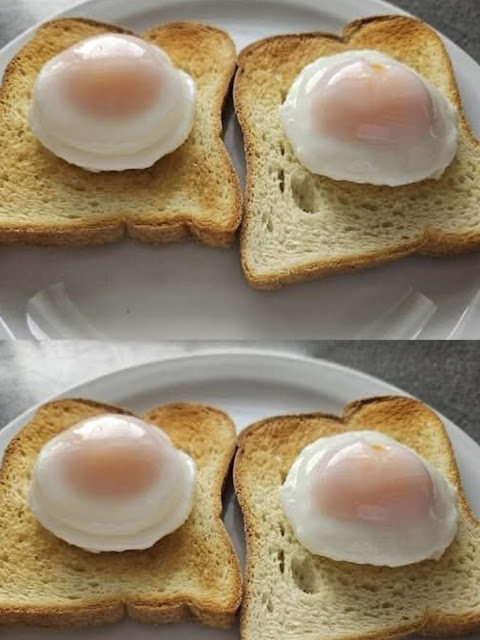
✔️ What Perfect Poached Eggs Look Like
- Compact, cloud-like whites
- No wispy strands floating around
- A yolk that flows when cut—not watery, not chalky
Common Questions (Answered!)
Do I really not need vinegar?
Correct. Vinegar is unnecessary when you strain the egg and control the heat.
Can I poach more than one egg at a time?
Yes—just give each egg space and lower them in gently.
Can I make them ahead?
Absolutely. Undercook slightly, chill in cold water, and reheat in hot (not boiling) water for 30–45 seconds.
What if my yolk breaks?
That usually means the egg wasn’t fresh or was dropped from too high.
Best Ways to Serve Poached Eggs
- On buttered toast or sourdough
- Over avocado toast
- With sautéed greens
- On grain bowls
- As the crown jewel of eggs Benedict
Final Thoughts
Perfect poached eggs aren’t about tricks—they’re about technique. Once you strain the egg and respect gentle heat, everything clicks into place. No vinegar. No swirling. No mess.
After one try, you’ll wonder why you ever thought poached eggs were hard.




Leave a Reply