
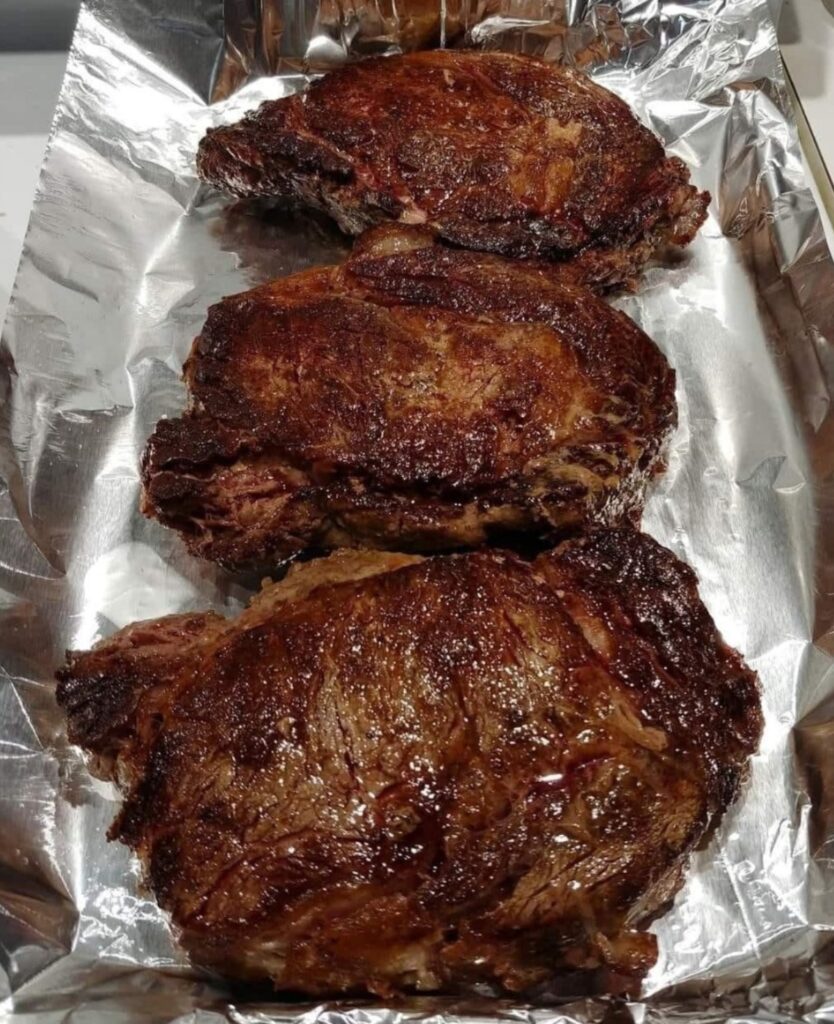
Few meals feel as satisfying as a Perfect Pan-Seared Ribeye Steak cooked at home. With its rich marbling, bold beefy flavor, and tender bite, ribeye is one of the most forgiving and rewarding cuts of steak you can cook. When done right, pan-searing delivers a beautifully caramelized crust while keeping the inside juicy and full of flavor—no grill required.
The first time I truly mastered pan-searing a ribeye was a turning point in my kitchen. I realized great steak doesn’t come from complicated techniques, but from respecting the meat, using high heat, and knowing when to leave it alone. As the steak hit the hot pan, the sizzle was instant. Butter foamed, the crust formed, and the aroma filled the room. One slice later, it was clear—this was steakhouse quality at home.
Ingredients
Equipment
Method
- Bring steak to room temperature and pat dry.
- Season generously with salt and pepper.
- Heat skillet over medium-high heat and add oil.
- Sear steak without moving until crust forms, then flip.
- Add butter and baste steak until desired doneness.
- Rest steak before slicing and serving.
Nutrition
Notes
Tried this recipe?
Let us know how it was!Why Pan-Seared Ribeye Is Always a Winner
Incredible Flavor from Marbling
Ribeye is prized for its marbling. Those streaks of fat melt as the steak cooks, basting the meat from the inside and delivering deep, beefy flavor.
Because of this natural richness, ribeye stays juicy even with high-heat cooking.
A Restaurant-Quality Crust at Home
Pan-searing creates intense surface heat, which triggers the Maillard reaction. This reaction is what gives steak its deeply browned, flavorful crust.
With the right pan and technique, you can achieve results that rival any steakhouse.
Choosing the Right Ribeye
Thickness Matters
A ribeye that is at least one inch thick works best. Thicker steaks allow time to build a crust without overcooking the interior.
Thin steaks cook too quickly and can become dry before a crust develops.
Bone-In or Boneless
Both work beautifully. Bone-in ribeye offers slightly more flavor, while boneless is easier to handle and cooks more evenly.
Choose what suits your preference and pan size.
Essential Ingredients for Perfect Ribeye
Steak as the Star
A high-quality ribeye is the most important ingredient. Look for good marbling and a bright, fresh color.
Bring the steak to room temperature before cooking for even doneness.
Salt and Pepper
Simple seasoning lets the beef shine. Salt enhances flavor and helps form the crust, while pepper adds subtle heat.
Season generously just before cooking.
Oil and Butter
A high-smoke-point oil starts the sear, while butter adds richness and flavor toward the end.
Together, they create depth and shine.
How to Pan-Sear Ribeye Steak Step by Step
Preparing the Steak
Pat the steak dry with paper towels. Moisture prevents proper browning, so this step matters.
Season both sides generously with salt and pepper.
Heating the Pan
Heat a heavy skillet over medium-high until very hot. Add oil and swirl to coat.
The oil should shimmer but not smoke excessively.
Searing the Steak
Place the steak in the pan and do not move it. Let it sear undisturbed until a deep golden crust forms.
Flip once and repeat on the other side.
Butter Basting for Flavor
Lower the heat slightly and add butter. As it melts, spoon it over the steak continuously.
This step adds richness and helps cook the steak evenly.
Resting Before Slicing
Remove the steak from the pan and let it rest. Resting allows juices to redistribute, keeping the steak juicy.
Slice against the grain for the best texture.
Doneness Guide for Ribeye
Rare to Medium-Rare
Ribeye shines at medium-rare. The fat renders beautifully while the meat stays tender.
Use a thermometer if needed for precision.
Avoid Overcooking
Overcooking causes fat to render out completely, leaving the steak less juicy.
Pull the steak slightly before your desired doneness, as it continues cooking while resting.
Tips for Steakhouse Results
Do Not Crowd the Pan
Cook one steak at a time if needed. Crowding lowers pan temperature and prevents proper searing.
Use a Heavy Pan
Cast iron or stainless steel holds heat best and creates an even crust.
Trust the Sear
Avoid flipping repeatedly. Let the crust form naturally.
Serving Ideas That Complete the Meal
Classic Pairings
Serve with mashed potatoes or roasted vegetables for a timeless steak dinner.
Fresh Contrast
A simple salad balances the richness of the steak.
Simple Finish
Finish with a sprinkle of flaky salt for added texture and flavor.
Storage and Reheating
Best Fresh
Steak is best enjoyed fresh, straight from the pan.
Reheating Carefully
If reheating, do so gently to avoid overcooking.
Common Mistakes to Avoid
Starting with a Cold Steak
Cold steak cooks unevenly.
Skipping the Rest
Resting is essential for juiciness.
Low Heat
High heat is key for a proper crust.
Frequently Asked Questions
Do I need a cast iron pan?
It helps, but any heavy skillet works.
Should I marinate ribeye?
No, ribeye shines with simple seasoning.
Can I add herbs?
Yes, add them during butter basting.
How long should I rest the steak?
Five to ten minutes works well.
Is ribeye better than other cuts?
For flavor and juiciness, it’s hard to beat.
Conclusion
Perfect Pan-Seared Ribeye Steak proves that incredible steak doesn’t require a grill or fancy tools. With the right cut, high heat, and a little patience, you can create a golden crust and juicy interior that rivals any restaurant. Once you master this method, you’ll never hesitate to cook ribeye at home again.


Leave a Reply