
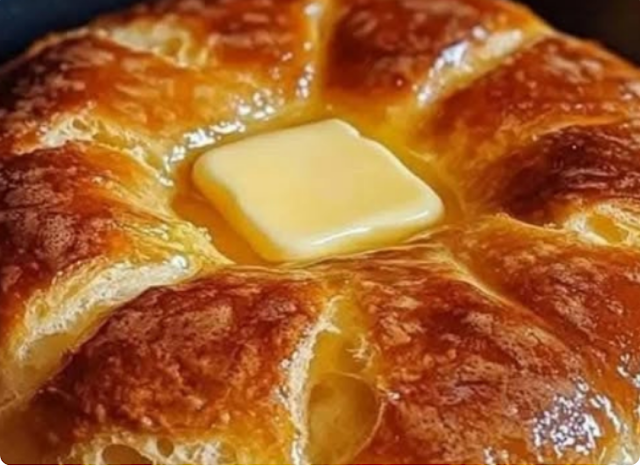
No-Oven Stovetop Bread is proof that homemade bread does not require an oven, special tools, or complicated techniques. This rustic loaf cooks gently in a heavy pan right on your stovetop, developing a soft, tender interior with a lightly crisp, golden crust. It is simple, reliable, and deeply satisfying—the kind of bread that makes you feel capable and comforted all at once.
This No-Oven Stovetop Bread recipe is perfect for small kitchens, hot summer days, camping trips, or moments when your oven is unavailable. Using basic pantry ingredients and straightforward steps, it delivers real bread flavor without the wait or stress. Fresh, warm bread is always within reach, no matter where you are cooking.
I first learned to appreciate stovetop bread during a time when baking options were limited. What started as a practical solution quickly became something I looked forward to. There is something grounding about flipping a loaf in a pan, listening to it cook, and cutting into it while it is still warm. It feels old-fashioned in the best way.
Ingredients
Equipment
Method
- Mix warm water, sugar, and yeast. Let stand until foamy, about 5 minutes.
- Combine flour and salt in a bowl. Add yeast mixture and oil and mix to form a dough.
- Knead dough until smooth, about 5 minutes. Place in oiled bowl and let rise until doubled.
- Shape dough into a round loaf.
- Heat a heavy pan over low heat. Add dough, cover, and cook 12–15 minutes until golden.
- Flip bread, cover, and cook another 8–10 minutes until fully cooked.
Nutrition
Notes
Tried this recipe?
Let us know how it was!Why No-Oven Stovetop Bread Works
Real bread without an oven
No-Oven Stovetop Bread relies on steady, gentle heat rather than high temperatures. A covered pan traps steam, allowing the bread to rise and cook evenly, much like an oven would. The result is bread that is fluffy inside, never dense, and pleasantly crisp on the outside.
This method removes the intimidation factor from bread baking. You stay present with the process, adjusting heat and timing as needed, which makes the outcome more forgiving.
Simple ingredients, dependable results
This recipe uses flour, yeast, water, sugar, salt, and oil—nothing more. Because the ingredient list is short, each element plays an important role. The yeast provides lift, the oil adds softness, and proper resting time allows the dough to develop flavor.
The simplicity makes this bread easy to repeat and adapt.
Ingredients That Make the Difference
Flour and yeast
All-purpose flour works perfectly here, creating a balanced crumb that is neither too chewy nor too soft. Active dry yeast gives reliable rise when properly activated with warm water and a touch of sugar.
Allowing the yeast to bloom ensures the bread rises well even without oven heat.
Oil for tenderness
Olive oil or melted butter adds richness and helps keep the bread soft after cooking. It also prevents sticking and contributes to the lightly crisp exterior.
This small amount of fat makes a noticeable difference in texture.
How to Make No-Oven Stovetop Bread
Mixing and kneading
Start by activating the yeast in warm water with sugar until foamy. Combine flour and salt, then add the yeast mixture and oil. Stir until a dough forms, then knead briefly until smooth and elastic.
The dough should feel soft but not sticky. Add a little flour if needed.
Rising and shaping
Place the dough in a lightly oiled bowl, cover, and let it rise until doubled in size. This step develops structure and flavor. Once risen, gently shape the dough into a round loaf.
Avoid overworking the dough at this stage to keep the crumb light.
Cooking on the stovetop
Heat a heavy-bottomed pan over low heat and lightly oil it. Place the dough in the pan, cover with a tight-fitting lid, and cook slowly. After the first side is golden and set, carefully flip the loaf and continue cooking until fully done.
Low heat is essential. Cooking too quickly will brown the outside before the inside is cooked.
Tips for Best Results
Use the right pan
A cast iron or thick stainless-steel pan distributes heat evenly and prevents hot spots. A tight lid helps trap steam, which mimics oven conditions.
If your lid has a vent, cover it lightly with foil to retain steam.
Control the heat
Keep the heat low and steady. If the bread browns too fast, reduce heat immediately. Patience ensures even cooking and a tender interior.
Variations to Try
Herb or garlic bread
Add dried herbs, minced garlic, or grated cheese to the dough for extra flavor. These additions turn the loaf into a savory centerpiece.
Flatbread style
Divide the dough into smaller portions and cook them as individual flatbreads. This shortens cooking time and creates versatile bread for wraps or dipping.
Serving and Storage
How to serve it
Serve No-Oven Stovetop Bread warm with butter, olive oil, or soup. It also makes excellent sandwich bread or toast when sliced.
Fresh bread pairs beautifully with simple meals.
Storing leftovers
Store cooled bread wrapped at room temperature for up to two days. Reheat slices in a pan to restore warmth and texture.
FAQ
Can I use instant yeast?
Yes, but skip blooming and mix directly with dry ingredients.
Does this bread taste yeasty?
No, the flavor is mild and balanced.
Can I make it dairy-free?
Yes, use olive oil instead of butter.
Why is my bread dense?
It may need more rise time or lower cooking heat.
Can I double the recipe?
Yes, but cook loaves separately for even results.
Conclusion
No-Oven Stovetop Bread brings homemade comfort to any kitchen, anywhere. With simple ingredients, gentle heat, and a little patience, it delivers warm, satisfying bread without relying on an oven. Whether you are cooking outdoors or just trying something new, this recipe proves that fresh bread is always possible.
Leave a Reply