
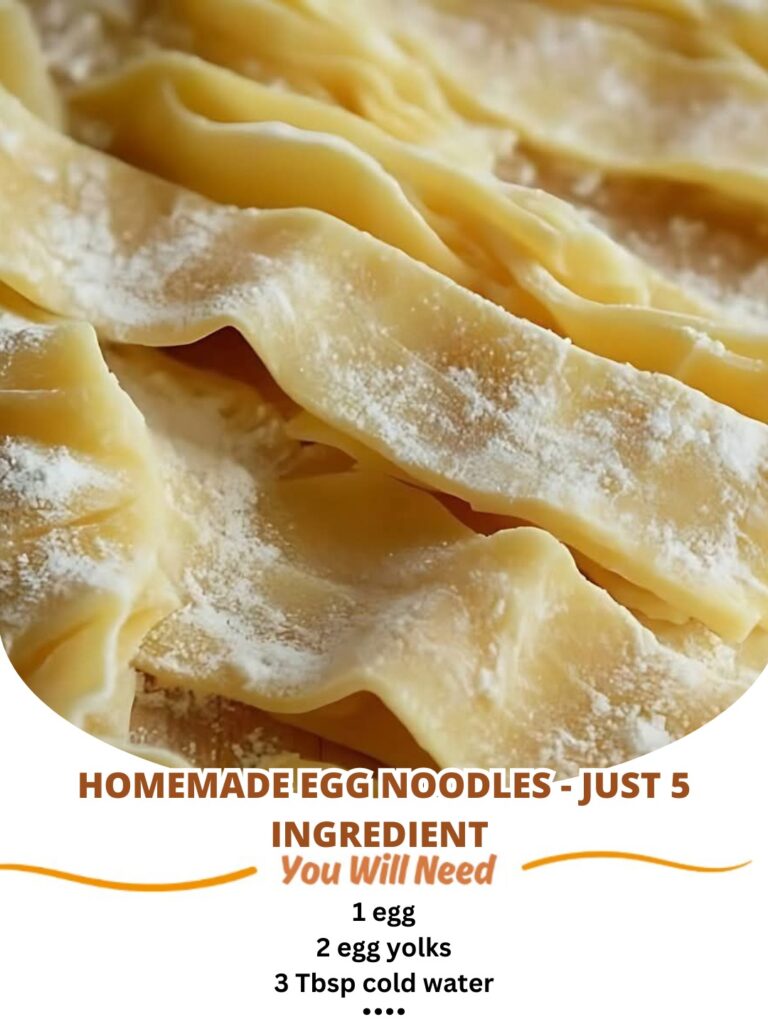
Homemade Egg Noodles bring comfort, flavor, and tradition straight into your kitchen with very little effort. These noodles are tender yet chewy, rich without being heavy, and far more satisfying than anything from a package. With only five basic ingredients, Homemade Egg Noodles prove that great food does not need to be complicated. From cozy soups to creamy sauces, these noodles adapt beautifully to almost any meal.
Because the dough comes together quickly and requires minimal tools, this recipe works well for beginners. Rolling and cutting the noodles feels relaxing and rewarding, especially when you see how easily they transform into something special. Once you try Homemade Egg Noodles from scratch, it becomes hard to go back to store-bought versions.
The first time I made Homemade Egg Noodles, it was on a quiet afternoon when dinner plans felt uninspired. I mixed the dough by hand, kneaded it slowly, and let it rest while the kitchen stayed calm and quiet. Rolling the dough felt grounding, and cutting the noodles brought back memories of watching family members cook without measuring much at all. When I finally dropped the noodles into boiling water, they puffed and softened almost instantly. That first bite was warm, rich, and comforting, and it turned this simple recipe into one I return to whenever I want something familiar and homemade.
Ingredients
Equipment
Method
- Mix flour and salt, then add eggs and oil and combine into a shaggy dough.
- Knead dough on a floured surface until smooth and elastic.
- Wrap dough and let rest at room temperature for 30 minutes.
- Roll dough thin and cut into desired noodle shapes.
- Cook noodles in boiling salted water for 2–3 minutes until tender.
Nutrition
Notes
Tried this recipe?
Let us know how it was!Why Homemade Egg Noodles Are Worth Making
Better Texture Than Store-Bought
Homemade Egg Noodles have a texture that packaged noodles cannot replicate. They cook quickly, stay tender, and still hold their shape. Because they contain fresh eggs, the noodles feel silky rather than starchy.
Rolling the dough yourself allows you to control thickness. Thicker cuts work well for soups and stews, while thinner noodles pair nicely with butter or cream sauces. This flexibility makes Homemade Egg Noodles useful for many dishes.
Simple Ingredients With Big Flavor
This recipe relies on everyday pantry staples. Flour provides structure, eggs add richness, and oil or butter brings softness. Salt enhances flavor, while a small amount of water helps bind the dough when needed.
Because there are no fillers or preservatives, Homemade Egg Noodles taste clean and fresh. The flavor stays neutral enough to complement bold sauces while still tasting good on their own.
Ingredients That Create the Perfect Dough
Flour, Eggs, and Fat
All-purpose flour works well for Homemade Egg Noodles because it balances strength and tenderness. Eggs contribute color, flavor, and elasticity, which helps the dough roll smoothly.
Olive oil keeps the dough supple, while melted butter adds richness. Either option works well, depending on your preference. Both choices produce noodles that cook evenly and feel satisfying.
Salt and Water
Salt seasons the dough lightly from the inside, which improves flavor without overpowering sauces. Water should only be added if the dough feels dry. Because egg sizes vary, adjusting slightly ensures a workable texture.
The dough should feel firm but flexible. This balance allows Homemade Egg Noodles to roll thin without cracking or shrinking back.
Making and Resting the Dough
Mixing the Dough
Start by whisking flour and salt together so seasoning spreads evenly. Creating a well for the eggs helps control mixing. Gradually pulling flour into the eggs prevents lumps and keeps the dough manageable.
Once the mixture forms a shaggy dough, switch to hands. Pressing and folding brings everything together without overworking. If needed, add water slowly to avoid stickiness.
Kneading and Resting
Kneading develops gluten, which gives Homemade Egg Noodles their chew. Five to seven minutes usually brings the dough to a smooth, elastic texture. It should spring back slightly when pressed.
Resting the dough remains essential. This step relaxes the gluten, making rolling easier and preventing shrinkage. After resting, the dough rolls out smoothly and evenly.
Rolling and Cutting the Noodles
Rolling the Dough Thin
Divide the dough into portions for easier handling. Lightly flour the surface and rolling pin to prevent sticking. Roll from the center outward, turning occasionally to keep shape even.
Aim for thin but sturdy sheets. Thicker dough creates hearty noodles, while thinner sheets cook faster. Choose based on how you plan to serve the Homemade Egg Noodles.
Cutting and Drying
Fold the rolled dough loosely or leave it flat. Cut strips with a knife or pizza cutter to your desired width. Separate the noodles gently to prevent sticking.
Allowing the noodles to dry briefly helps them hold shape during cooking. Even ten minutes improves texture, especially for soups.
Cooking and Serving Homemade Egg Noodles
Cooking Time and Tips
Fresh Homemade Egg Noodles cook quickly. Boil them in salted water for two to three minutes until tender. Stir gently to prevent clumping.
Taste early to avoid overcooking. Because they are fresh, they soften fast and remain delicate.
Serving Ideas
Serve Homemade Egg Noodles in chicken soup, with butter and herbs, or under rich sauces. They also work well in casseroles or alongside roasted vegetables.
Their neutral flavor allows them to adapt to many cuisines, making them a versatile staple.
Frequently Asked Questions
Can I make these ahead of time?
Yes. Dry the noodles completely and store them in an airtight container.
Do I need a pasta machine?
No. A rolling pin works perfectly.
Can I freeze the dough?
Yes. Wrap tightly and freeze for later use.
How thick should I cut the noodles?
That depends on preference. Thicker noodles feel heartier.
Can I use butter instead of oil?
Yes. Butter adds extra richness.
Conclusion
Homemade Egg Noodles bring warmth, simplicity, and comfort to everyday cooking. With just five ingredients and a little time, you can create noodles that taste richer and fresher than store-bought options. Whether served in soup or tossed with sauce, this recipe turns basic ingredients into something truly satisfying.




Leave a Reply