
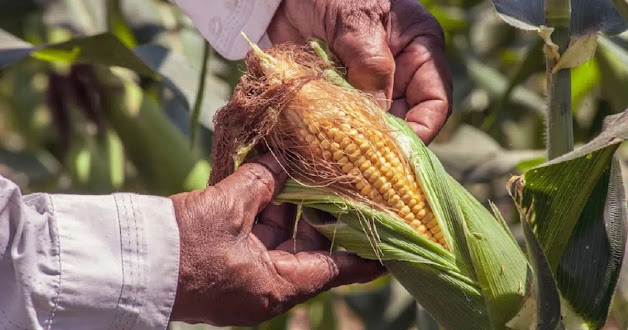
If you've ever driven through the countryside during summer, you've probably seen enormous fields of towering corn stretching as far as the eye can see. The plants seem almost endless, forming green walls that line highways and cover entire valleys.
Most people naturally assume all of that corn eventually ends up on dinner plates as buttery corn on the cob.
Surprisingly, that's far from the truth.
In fact, the vast majority of corn grown across North America isn't the sweet, juicy corn sold at farmers' markets or grocery stores. Instead, it's an entirely different variety known as field corn, a crop that plays a critical role in agriculture, food manufacturing, renewable energy, and livestock production.
Although both field corn and sweet corn belong to the same species (Zea mays), they were developed for completely different purposes. Understanding the differences helps explain why one variety is delicious fresh off the cob while the other is almost impossible to chew.
Let's explore the fascinating world of corn and discover why this remarkable crop is one of the most important plants on Earth.
Corn: One Plant, Many Purposes
Corn has been cultivated for thousands of years.
Originally domesticated in present-day Mexico over 9,000 years ago, it gradually spread throughout the Americas before becoming one of the world's most widely grown crops.
Today, corn serves countless purposes beyond simply feeding people.
Different varieties have been selectively bred over centuries to emphasize specific traits such as:
- Sweetness
- Starch production
- Animal nutrition
- Popcorn expansion
- Flour production
- Disease resistance
- Drought tolerance
As a result, not all corn looks—or tastes—the same.
The two varieties most people encounter are sweet corn and field corn.
Although they may appear similar at first glance, they are harvested at different stages and have very different uses.



Leave a Reply