
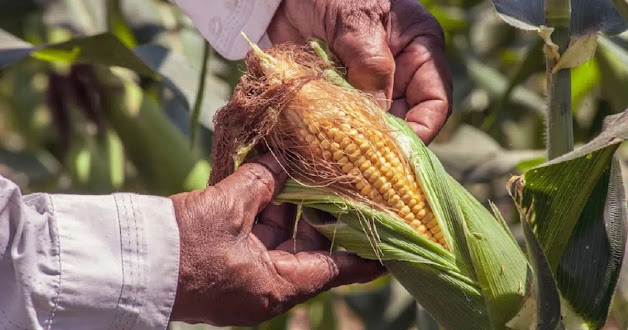
What Is Field Corn?
Field corn, also called dent corn, is the most widely grown type of corn in North America.
Its nickname comes from the small dent that forms on the top of each kernel as it dries.
Unlike sweet corn, field corn is not harvested while fresh.
Instead, farmers leave it in the field until the ears are fully mature and the kernels become hard, dry, and rich in starch.
At this stage, the corn is unsuitable for eating directly from the cob.
The kernels are tough, dense, and far less sweet than fresh sweet corn.
However, those same characteristics make field corn incredibly valuable for industry and agriculture.
Why Farmers Grow So Much Field Corn
Field corn is often called the workhorse of modern agriculture.
It supports numerous industries that most consumers rarely think about.
Some of its most important uses include:
Livestock Feed
A significant portion of field corn becomes feed for:
- Cattle
- Dairy cows
- Pigs
- Chickens
- Turkeys
Its high starch content provides animals with a concentrated source of energy.
Food Manufacturing
Although people rarely eat field corn directly, they consume products made from it every day.
Field corn is processed into:
- Cornmeal
- Corn flour
- Grits
- Corn starch
- Corn syrup
- Corn oil
Many breakfast cereals, snack foods, tortillas, and baked goods begin with processed field corn.
Renewable Energy
Field corn also contributes to ethanol production.
Ethanol is blended with gasoline in many regions to create cleaner-burning fuel.
This makes corn an important crop not only for food but also for transportation.
Industrial Products
Corn-derived ingredients appear in surprising places, including:
- Biodegradable plastics
- Adhesives
- Paper products
- Cosmetics
- Pharmaceuticals
Its versatility explains why enormous fields of field corn dominate agricultural landscapes.
What Makes Sweet Corn Different?
Sweet corn is the variety people associate with summer cookouts and family dinners.
Unlike field corn, sweet corn contains a natural genetic mutation that allows sugars to remain in the kernels rather than rapidly converting into starch.
Because of this characteristic, sweet corn tastes noticeably sweeter and juicier.
Farmers harvest it much earlier, while the kernels are still:
- Soft
- Tender
- Moist
- Full of natural sugars
This stage is often called the milk stage, referring to the milky liquid released when a fresh kernel is punctured.
Timing is critical.
Even a delay of one or two days after peak maturity can reduce sweetness as sugars gradually transform into starch.
Why Fresh Sweet Corn Tastes Better
Many people notice that sweet corn purchased directly from local farms often tastes much sweeter than supermarket corn.
There is a scientific explanation.
Immediately after harvest, enzymes inside the kernels begin converting sugar into starch.
The longer corn sits after picking, the less sweet it becomes.
Farmers' market corn often reaches consumers within hours of harvest.
By contrast, supermarket corn may spend days traveling through harvesting, transportation, storage, and distribution systems.
Although modern supersweet varieties retain sweetness longer than traditional varieties, freshness still makes a noticeable difference.
Comparing Field Corn and Sweet Corn
| Feature | Field Corn | Sweet Corn |
|---|---|---|
| Harvest Stage | Fully mature and dry | Young and tender |
| Flavor | Bland and starchy | Sweet and juicy |
| Texture | Hard kernels | Soft kernels |
| Main Uses | Animal feed, processed foods, ethanol | Fresh eating, freezing, canning |
| Sugar Content | Low | High |
| Starch Content | Very high | Lower at harvest |
Although they belong to the same species, they function almost like entirely different crops.
Is Popcorn the Same Thing?
Another common misconception involves popcorn.
Popcorn is neither sweet corn nor field corn.
Instead, it is its own specialized variety.
Each popcorn kernel contains:
- A hard outer shell
- Moisture trapped inside
- Dense starch
When heated, the moisture turns into steam.
Pressure builds until the shell suddenly bursts, causing the starch to expand into the fluffy popcorn people enjoy.
This unique structure explains why ordinary sweet corn cannot be used to make popcorn.
Choosing the Best Sweet Corn
Selecting fresh sweet corn is easier than many people think.
Several simple observations can reveal quality.
Examine the Husk
Look for:
- Bright green leaves
- Tight wrapping around the ear
- Fresh appearance
Dry or brown husks often indicate older corn.
Check the Silk
Healthy silk should feel:
- Slightly sticky
- Moist
- Golden to light brown
Dry, brittle silk may indicate aging.
Feel the Ear
Without removing the husk completely, gently squeeze the ear.
You should feel:
- Firm kernels
- Even rows
- No large empty spaces
Missing kernels often result from incomplete pollination.
Storing Sweet Corn
Because sweetness gradually declines after harvest, proper storage matters.
To preserve quality:
- Refrigerate immediately.
- Leave the husks attached.
- Store in the vegetable drawer.
- Cook within one or two days if possible.
Keeping corn cold slows the conversion of sugars into starch.
Can Sweet Corn Be Frozen?
Absolutely.
Freezing is one of the best ways to preserve peak summer flavor.
Most home preservation methods recommend:
- Remove the husks.
- Blanch ears in boiling water for several minutes.
- Transfer immediately into ice water.
- Drain thoroughly.
- Cut kernels from the cob.
- Freeze in airtight containers or freezer bags.
Properly frozen corn maintains excellent quality for several months.
Nutritional Benefits of Sweet Corn
Sweet corn provides more than just great flavor.
It contains:
- Dietary fiber
- Vitamin C
- Folate
- Potassium
- Magnesium
- B vitamins
- Antioxidants such as lutein and zeaxanthin
These nutrients support digestion, immune function, and eye health.
Although corn contains natural carbohydrates, it can fit comfortably into a balanced diet.
A Simple Creamy Sweet Corn Dip
Fresh sweet corn also shines in easy recipes.
One crowd-pleasing option requires only a few ingredients.
Ingredients
- 1 can or 2 cups cooked sweet corn
- 8 ounces softened cream cheese
- 1 packet ranch seasoning
Directions
Mix the softened cream cheese with ranch seasoning until smooth.
Fold in the corn.
Serve chilled or warm with tortilla chips, crackers, or fresh vegetables.
The combination of creamy, savory, and naturally sweet flavors makes it popular at gatherings.
Appreciating Both Types of Corn
It is easy to think of field corn as the "less exciting" variety because it rarely appears on dinner plates.
However, modern agriculture depends heavily upon it.
Without field corn:
- Livestock production would change dramatically.
- Many processed foods would disappear.
- Ethanol production would decline.
- Numerous industrial products would require alternative materials.
Sweet corn, meanwhile, represents one of summer's most beloved seasonal foods.
Together, these two varieties demonstrate the incredible versatility of a single plant species.
Conclusion
Although they may look similar from a distance, field corn and sweet corn serve remarkably different purposes. Field corn is the backbone of modern agriculture, supporting livestock, food manufacturing, renewable energy, and countless industrial products. Sweet corn, on the other hand, is carefully harvested while young and tender, delivering the juicy, sugary flavor that has become a favorite at summer cookouts and family dinners.
Understanding the difference helps us appreciate both crops for what they contribute. One quietly powers much of our agricultural economy, while the other brings people together around picnic tables, backyard barbecues, and holiday meals. The next time you pass an endless cornfield or bite into a perfectly sweet ear of corn, you'll know that this remarkable plant has a much bigger story than most people realize.


Leave a Reply