
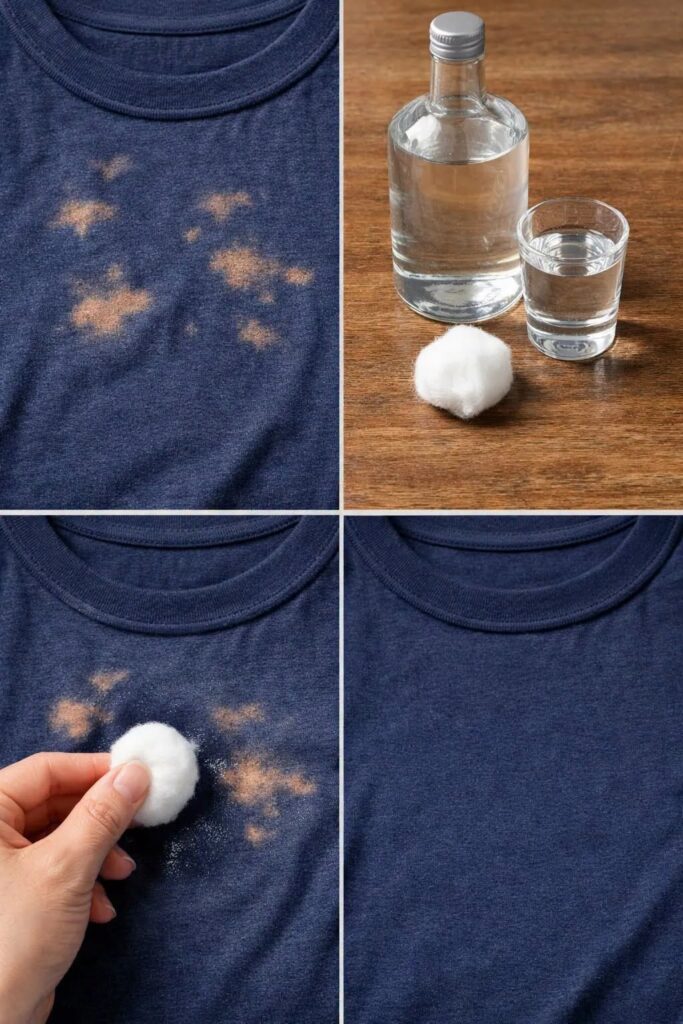
We've all experienced that sinking feeling.
You're cleaning the bathroom, whitening towels, or doing laundry when a tiny splash of bleach lands somewhere it shouldn't. At first, nothing seems wrong. Then, within seconds, a pale spot appears on your favorite shirt, jeans, hoodie, or dress.
Your first thought is probably, "I just ruined it."
Fortunately, that's not always true.
While bleach permanently removes color from fabric, it doesn't necessarily mean the garment belongs in the trash. In many cases, you can disguise the damage, restore the appearance, or even transform the piece into something that looks intentional and stylish.
Before giving up on your favorite clothing, here's everything you should know about bleach stains, why they happen, and the best ways to save your clothes.
Why Bleach Leaves Permanent White Spots
Bleach isn't technically a stain.
Instead, it removes color.
When chlorine bleach touches dyed fabric, it breaks apart the chemical compounds responsible for the fabric's color. Unlike coffee, wine, or grease stains, nothing is sitting on top of the fabric waiting to be cleaned away.
The original dye has simply been destroyed.
That's why washing the garment repeatedly won't make the white spot disappear.
The only real solution is replacing or disguising the missing color.
Should You Throw the Clothing Away?
Absolutely not.
Many bleach accidents involve only a tiny spot that most people won't notice once it's repaired.
Depending on the fabric and the amount of discoloration, you may be able to:
- Touch up the damaged area.
- Re-dye the entire garment.
- Add decorative embroidery.
- Create a custom design.
- Turn it into a fashionable tie-dye project.
Sometimes an accident becomes an opportunity to give an older piece of clothing a completely new life.
Step 1: Assess the Damage
Before deciding how to repair the garment, inspect it carefully.
Ask yourself:
- How large is the damaged area?
- Is the fabric dark or light?
- Is the garment patterned or solid-colored?
- Is it cotton, denim, linen, polyester, or another fabric?
Small bleach spots are usually much easier to disguise than large faded sections.
Dark-colored clothing also tends to respond better to spot repairs.
Step 2: Choose the Best Repair Method
Fabric Marker
Fabric markers work well for tiny bleach spots.
Choose a color that closely matches your garment and test it first on an inside seam.
Lightly color the damaged area instead of saturating it.
Allow it to dry before deciding whether another coat is needed.
Fabric Dye
Liquid fabric dye offers a more natural appearance when repairing larger faded areas.
Apply it with a cotton swab or fine paintbrush, working slowly to blend the edges.
Several thin applications generally produce better results than one heavy layer.
Dye the Entire Garment
If the bleach damage is extensive, consider giving the entire garment a fresh color.
Black, navy, charcoal, forest green, burgundy, and chocolate brown often cover bleach damage very effectively.
Many people discover they actually prefer the garment's new color.
Step 3: Prepare Your Workspace
Gather your supplies before beginning.
You'll need:
- Fabric dye or fabric marker
- Cotton swabs
- Disposable gloves
- White towel
- Paper towels
- Small bowl of water
- Good lighting
Place the garment on a flat surface and insert a folded towel inside it to prevent dye from soaking through.



Leave a Reply