
When Imagination Moves Faster Than Facts
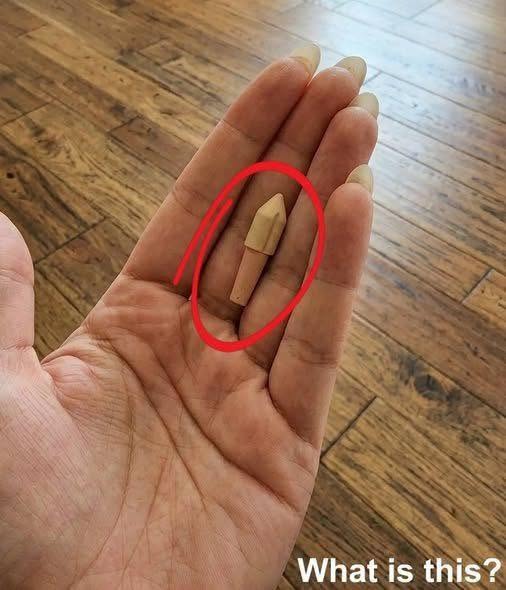
Standing alone in the laundry room, I turned the object over in my hands.
Every tiny scratch seemed significant.
Its unusual shape looked deliberate.
The weight of the metal made it feel important.
The longer I stared at it, the more questions filled my mind.
Why had it been hidden so deep inside his pocket?
Why had I never seen anything like it before?
Most importantly...
Why didn't I know what it was?
When my husband walked into the kitchen a few minutes later, I held it out.
"Do you know what this is?"
He barely glanced at it before taking another sip of his coffee.
"No idea."
That answer unsettled me even more.
How could something be sitting in his pocket without him recognizing it?
My thoughts immediately began racing.
The Stories We Tell Ourselves
As I returned to the laundry room, my mind started connecting dots that didn't actually exist.
Maybe it belonged to someone else.
Maybe he'd picked it up somewhere unusual.
Maybe there was an explanation he wasn't telling me.
The object itself hadn't changed.
But my interpretation of it had.
Within minutes, what was probably an ordinary piece of metal had become the center of an elaborate story my anxious brain was writing without any real evidence.
Looking back now, I realize how quickly uncertainty can transform into suspicion when we don't yet have answers.
Choosing Curiosity Instead of Assumptions
After sitting with my thoughts for nearly an hour, I realized something important.
I hadn't actually given my husband a chance to look at the object carefully.
I had asked a quick question.
He had given a quick answer.
Neither of us had really examined what I had found.
So I walked back into the living room.
This time I placed the object directly into his hand.
"Could you please look at it again?"
He finally set down his coffee mug.
He studied the metal carefully.
A few seconds later, his entire expression changed.
His eyes widened.
Then he started laughing.
The Mystery Finally Solved
"I know exactly what this is," he said, still smiling.
"It's my 3/16-inch masonry drill bit."
I stared at him blankly.
"My what?"
"The drill bit," he repeated, turning it over in his hand. "I was repairing the loose brick on the garden wall yesterday. I must have slipped it into my pocket while I was moving the ladder and completely forgot about it."
He pointed to the sharp carbide tip.
"That's why it looks so unusual. It's designed to drill through concrete and brick."
Suddenly everything made sense.
The scratches I'd been examining weren't mysterious signs of something sinister.
They were simply marks left behind from drilling into masonry.
The spiral grooves weren't decorative or secretive.
They were there to carry concrete dust out of the hole while the drill worked.
The strange object that had fueled an hour of anxiety was nothing more than an ordinary tool.
From Fear to Laughter
For a few seconds I just stood there.
Then I started laughing.
Not because the situation had been funny at first—but because of how dramatically my imagination had transformed a forgotten drill bit into something far more alarming.
My husband laughed too.
"I really didn't recognize it earlier," he admitted.
"I was thinking about work when you first asked me. I barely looked."
He apologized for dismissing my question so casually.
I apologized for allowing my imagination to race ahead of the facts.
Within minutes, the tension that had filled the house completely disappeared.
Why Our Minds Jump to Conclusions
Looking back, I realized my brain had been doing something psychologists often describe as catastrophic thinking.
When faced with uncertainty, our minds sometimes create worst-case explanations before considering ordinary ones.
Instead of asking:
"What's the simplest explanation?"
we often ask:
"What's the worst thing this could possibly mean?"
Stress, fatigue, anxiety, and past experiences can all make these reactions stronger.
Most of the time, however, reality turns out to be much less dramatic.
Learning to Pause Before Assuming
That afternoon reminded me how important it is to separate feelings from facts.
Finding something unfamiliar naturally raises questions.
But unanswered questions aren't evidence of wrongdoing.
A calm conversation usually reveals far more than hours of silent speculation.
Had I continued building stories in my head instead of asking for clarification, I might have created conflict where none actually existed.
Sometimes the simplest explanation really is the correct one.
And sometimes a forgotten tool is simply...a forgotten tool.
A Lesson I'll Never Forget
That evening, after everything had settled down, I found myself thinking less about the drill bit and more about what the experience had revealed about my own thinking.
The object had never been the real problem.
The real challenge was how quickly uncertainty had turned into fear.
I realized that when we care deeply about someone, even small moments of confusion can feel much bigger than they really are. Our minds naturally try to fill in missing information, and unfortunately, they don't always choose the most reasonable explanation first.
Instead, they often prepare us for the worst.
Communication Changes Everything
Later that night, my husband and I talked about what had happened.
He admitted he should have taken a closer look when I first showed him the object instead of answering absentmindedly.
"I honestly wasn't paying attention," he said. "If I'd actually looked at it, we could have avoided all of this."
I admitted that I had allowed my imagination to run far ahead of the facts.
Instead of asking more questions, I had quietly built an entire story in my mind.
We both laughed at how a forgotten drill bit had nearly become the center of an unnecessary argument.
The experience reminded us that clear communication is often the simplest solution to misunderstandings.
Giving Each Other the Benefit of the Doubt
Every long-term relationship experiences moments of uncertainty.
People forget things.
They become distracted.
They answer questions too quickly.
None of those moments automatically signal dishonesty.
Choosing to pause before assuming the worst can protect trust and prevent small misunderstandings from becoming much larger conflicts.
Of course, trust is built through consistent honesty over time. When that foundation exists, it deserves the chance to speak louder than fear or speculation.
Final Thoughts
Sometimes the biggest mysteries have the simplest explanations. What first appeared to be a strange and unsettling discovery hidden in a pocket turned out to be nothing more than a forgotten masonry drill bit left over from a weekend home repair.
The experience became an unexpected reminder that our minds can sometimes transform ordinary situations into unnecessary sources of anxiety when we don't yet have all the facts.
Rather than allowing fear to fill the gaps, asking thoughtful questions and communicating openly often leads to a much calmer—and much more accurate—understanding of the situation.
In the end, the mysterious piece of metal wasn't evidence of a hidden secret. It was simply a tool, forgotten after an afternoon of fixing a garden wall.
Sometimes the strongest relationships aren't built because misunderstandings never happen.
They're built because both people choose conversation before conclusions, curiosity before accusation, and trust before fear.


Leave a Reply