
In India, where stories rise from steaming cups of chai and conversation flows as easily as laughter, our mouths are not just physical spaces. They are sacred.
They carry our humor, our hymns, our secrets, our anger, our kindness, our prayers.
Yet inside this tender space—soft, warm, familiar—danger sometimes hides quietly.
Not loudly.
Not painfully.
Just… silently.
Oral cancer is rising across our communities. Not to frighten us, but to awaken us.
Because here is a truth many never hear:
When oral cancer is found early, more than 80% of people survive.
But when it’s found late, the numbers fall sharply.
In India, heartbreakingly, 90% of cases are diagnosed too late—not because people don’t care, but because the early signs are so easy to dismiss.
This isn’t about shame.
It’s about clarity.
It’s about love.
It’s about protecting the stories your mouth still has left to speak.
Let’s walk through this gently, courageously, and without fear.
The Signs of Oral Cancer Most People Miss
Oral cancer rarely begins with pain.
It begins as a whisper.
A small annoyance.
A patch.
A sore you think will go away.
A discomfort you blame on spicy food or a sharp tooth.
Because in our culture, we grow up saying:
“Ye toh ulcer hoga.”
“Masala lag gaya hoga.”
“Thodi der mein thik ho jayega.”
But cancer is patient.
It waits for us to ignore it.
Red Flags That Should Never Be Ignored (Especially If Lasting > 2 Weeks)
Look for these quiet signs:
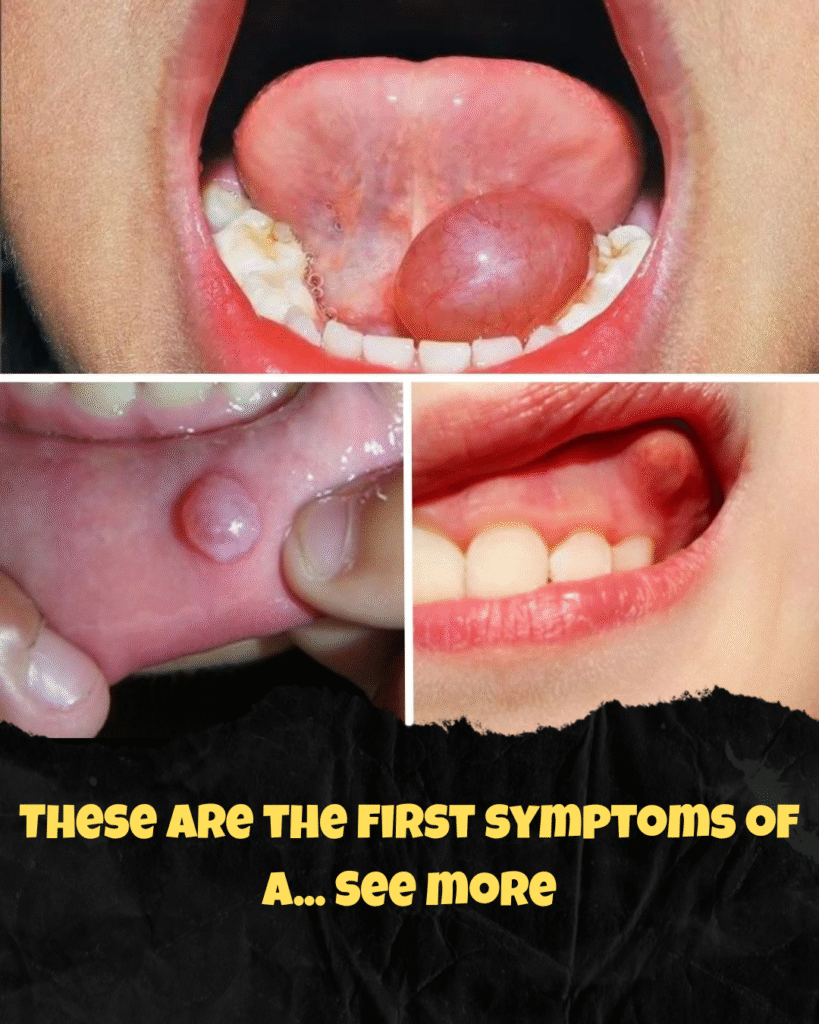
- A sore or ulcer that won’t heal on the lips, gums, or inside the cheek
- Velvety white patches (leukoplakia)
- Velvety red patches (erythroplakia — often more dangerous)
- A lump or thickened area you can feel with your tongue
- Numbness in the lips, tongue, or chin
- Loose teeth without gum disease
- Dentures becoming uncomfortable or suddenly not fitting
- Pain while swallowing deeper than a simple sore throat
- Persistent ear pain on one side
- A feeling that something is stuck in your throat
🌸 Healing wisdom:
Mouth ulcers from spice or stress heal in 7–10 days.
If a sore is still there on day 15, it deserves a doctor’s attention.
Where Oral Cancer Hides: India’s Most Common Sites
Oral cancer is not one disease.
It is a family with many hiding places—each with its own story, its own risk factors, its own pattern.
In India, these are the most common locations:
Buccal Mucosa (Inner Cheek)
- The world’s highest rate occurs in India.
- Strongly linked to holding tobacco quid (gutka, paan, khaini) inside the cheek.
- Appears as white patches, thickened areas, or non-healing sores.
Tongue (Especially the Sides and Back)
- Often ignored until it bleeds or affects speech.
- Can spread quickly.
Gums (Upper or Lower)
- Mimics gum infection.
- Many delay care thinking it’s “just swelling.”
Floor of Mouth (Under the Tongue)
- One of the most dangerous areas.
- Swelling may be mistaken for a dental abscess.
Lips (Especially the Lower Lip)
- Common in farmers, fishermen, and outdoor workers due to sun exposure.
- Also worsened by smoking.
Palate (Roof of the Mouth)
Especially where betel quid rests or where very hot beverages are consumed.
Pay attention to any small change—your mouth is giving you important information.
Why India Faces the Highest Oral Cancer Rates in the World
Understanding risk factors is not about shame.
It’s about truth—so we can protect future generations.
1. Tobacco in All Its Forms
This is the strongest thread.
- Gutka
- Khaini
- Paan masala
- Betel quid
- Beedis
- Cigarettes
Smokeless tobacco alone causes 70% of India’s oral cancer cases.
The chemicals sit against the cheek, gums, and tongue for long periods—far more harmful than quick exposure from smoking alone.
2. Alcohol + Tobacco = 30x Higher Risk
Many people take a puff with a drink at night.
But this combination creates a chemical reaction that severely damages the mouth’s protective lining.
3. Nutritional Deficiencies
Low intake of:
- Vitamin A
- Vitamin C
- Vitamin E
These vitamins help the mouth repair itself.
In many Indian households, especially rural ones, diets can fall short—especially in winter or during monsoon shortages.
4. HPV (Human Papillomavirus)
Though less common than tobacco-related cancers in India, HPV-related mouth and throat cancers are rising silently, especially among younger individuals.
5. Excessive Sun Exposure
Lower lip cancers are common in outdoor workers:
- Farmers
- Fishermen
- Vendors
- Construction workers
UV rays damage the delicate tissues.
6. Family History
If a parent or sibling has oral cancer, your personal risk increases.
💛 Compassionate truth:
Using tobacco or drinking does not make anyone “bad.”
These habits were normalized in our culture for decades.
Healing begins with support—not shame.
When to Seek Help: An Action Plan for Every Family
Don’t wait for pain.
Or for bleeding.
Or for someone else to tell you to go.
In oral cancer, early detection saves lives—and reduces the need for major surgery.
See a Dentist or ENT Specialist If:
- A sore hasn’t healed in 2 weeks
- You notice white or red patches
- There’s unexplained bleeding
- Your voice changes
- You feel a lump in your neck
- Swallowing becomes difficult
Free or Low-Cost Help in India
Many people worry about the cost of cancer screening. Here are accessible options:
- Tata Memorial Hospital – Tobacco Cessation Clinics
- AIIMS (All India Institute of Medical Sciences) – free oral cancer screening camps
- Regional Cancer Centres like RCC Thiruvananthapuram
- State Cancer Institutes
- ASHA workers can guide you to district hospital screenings
🙏 If money is tight:
Tell the hospital front desk:
“I need an oral cancer screening under PMJAY / Ayushman Bharat.”
Most government hospitals honor this program.
Understanding Stages: Not for Fear—For Hope
Staging helps doctors choose the right treatment.
It is not a measure of worth.
It is a map.
Stage 0 – Pre-Cancer
- Abnormal cells on the surface only
- 95%+ cured with small removal
Stage I
- Tumor < 2 cm
- No spread
- 80–90% survival
Stage II
- Tumor 2–4 cm
- No spread
- 70–80% survival
Stage III
- Tumor > 4 cm OR small lymph node spread
- 50–60% survival
Stage IV
- Spread to multiple nodes or distant parts
- 30–40% survival
✨ Hopeful reminder:
Many Stage I cancers require only small surgery—not radiation or chemotherapy.
This is why a 2-week ulcer should never be ignored.
How to Check Your Mouth at Home: A 60-Second Self-Exam
It can save your life—or the life of someone you love.
1. Use a bright light (phone flashlight works)
Open wide. Look at:
- Inner cheeks
- Lips
- Gums
- Tongue (top, sides, underside)
- Roof of mouth
- Floor under tongue
2. Touch gently with clean fingers
Feel for:
- Lumps
- Thick areas
- Rough patches
3. Check your neck
Press gently along both sides under your jaw.
Soft, moveable lumps = common.
Hard, fixed lumps = need attention.
4. Look for color changes
Any patch that is:
- white
- red
- mixed red-and-white
- brown
- velvety
- ulcer-like
deserves medical evaluation if it lasts more than 2 weeks.
How to Protect Yourself and Your Loved Ones
Prevention is powerful.
1. Quit tobacco—any form, any amount
Even 1–2 daily gutka packets matter.
Get help, not judgment:
- NISD helpline
- Tata Memorial quitlines
- Counseling at district hospitals
2. Reduce alcohol
Even small reductions save cellular damage.
3. Eat protective foods
Rich in vitamins A, C, E:
- Amla
- Papaya
- Green leafy vegetables
- Carrots
- Tomatoes
- Oranges
- Bell peppers
4. Avoid very hot beverages
Scalding chai damages mouth tissues.
Let it cool slightly before sipping.
5. Use sun protection
For outdoor workers:
- Wide-brimmed hats
- Lip balms with SPF
- Cloth masks
6. Get dental checkups twice a year
Dentists spot early signs you can’t.
A Cultural Truth We Must Speak Aloud
Oral cancer in India is not just a medical issue.
It is a cultural one.
Gutka and paan are sold at every street corner.
Drinking is woven into celebrations.
Working in harsh sunlight is unavoidable for millions.
Health checkups are often delayed out of cost or fear.
But our mouths—our voices—carry our stories.
We owe them protection.
There is no shame in seeking care.
Only wisdom.
Only courage.
Only love.
A Closing Message: Your Mouth Holds Sacred Space
Your mouth is more than flesh.
It is the place where:
- your children hear “I love you,”
- your prayers rise,
- your laughter spills,
- your wisdom travels,
- your identity lives.
Oral cancer does not erase this.
But ignoring early signs might.
So today, take one brave step:
👉 Look inside your mouth with curiosity, not fear.
👉 Encourage the elders in your home to do the same.
👉 Talk gently to anyone who uses tobacco.
👉 And if you notice something unusual—choose action, not anxiety.
Because the most powerful gift you can give your family
is more years with you.
More stories.
More celebrations.
More Diwalis.
More shared chai.
More laughter echoing across generations.
Your smile, your voice, your presence—they matter.
And they are worth protecting.

Leave a Reply