
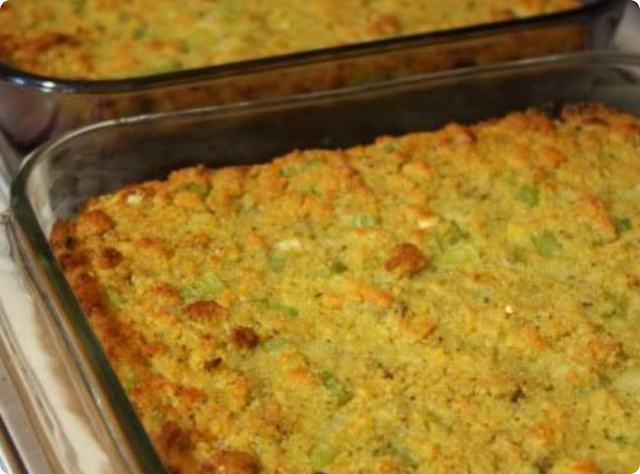
Cornbread Dressing is more than a side dish. It is the emotional center of the table, the one recipe everyone quietly hopes turns out just right. Made with golden, buttery cornbread, savory onions, and warm herbs, this dish delivers deep comfort in every bite. Crisp around the edges and tender through the middle, it brings together texture, aroma, and flavor in a way that feels deeply familiar and endlessly satisfying.
This Cornbread Dressing recipe is rooted in tradition but designed for real kitchens. It starts with crumbled cornbread and builds slowly, soaking up savory broth and aromatic seasonings until every piece is infused with flavor. Baked uncovered at the end, it develops that irresistible golden crust that contrasts beautifully with the moist interior. Whether served at a holiday feast or a Sunday supper, this dish always feels like home.
I first learned the importance of cornbread dressing by watching how quiet the table became when it was served. Conversations slowed. Forks paused only long enough for the next bite. It was never flashy food, but it carried history, care, and comfort. Over time, I realized that good dressing is not about precision. It is about balance, patience, and trusting the process.
Ingredients
Equipment
Method
- Preheat oven to 375°F and grease a baking dish.
- Melt butter in a skillet and sauté onion and celery until soft.
- Stir in sage and poultry seasoning, then remove from heat.
- Combine cornbread, vegetables, eggs, salt, and pepper in a large bowl.
- Gradually add broth until mixture is very moist.
- Transfer to baking dish, cover, and bake 30 minutes. Uncover and bake 20 minutes until golden.
Nutrition
Notes
Tried this recipe?
Let us know how it was!Why Cornbread Dressing Belongs on Every Table
Moist yet structured texture
Cornbread Dressing succeeds when it strikes the right balance between tender and cohesive. Starting with a mixture that feels almost too wet ensures the final dish stays moist. As it bakes, steam works its way through the dressing, softening the cornbread without turning it mushy.
The final uncovered bake allows excess moisture to evaporate while the top turns golden and lightly crisp. This contrast is what makes Cornbread Dressing so satisfying from the first bite to the last.
Deep, savory flavor
This dish builds flavor slowly. Onions soften until sweet, herbs release their aroma, and broth ties everything together. Sage and poultry seasoning add warmth and earthiness without overpowering the cornbread.
Because everything is mixed thoroughly before baking, every forkful tastes complete. There are no bland corners, only layered, comforting flavor.
Ingredients That Make the Difference
The cornbread base
Cornbread is the foundation of this recipe. A buttermilk-style cornbread with a tender crumb works best. Slightly dry cornbread actually performs better than freshly baked, as it absorbs broth more evenly.
Crumbling the cornbread by hand keeps the texture varied. Some pieces stay soft, while others add structure. This variation is key to great Cornbread Dressing.
Aromatics and herbs
Onions and celery provide savory depth and subtle sweetness. Butter carries flavor and adds richness. Sage and poultry seasoning bring warmth that defines traditional dressing.
Using broth instead of water ensures every bite is seasoned and flavorful. Chicken or turkey broth both work well, depending on what you have.
How to Make Cornbread Dressing
Preparing the mixture
Start by sautéing onions and celery in butter until soft and fragrant. This step builds the flavor base. Add herbs and seasonings, allowing them to bloom briefly in the heat.
In a large bowl, combine crumbled cornbread with the sautéed vegetables. Gradually add broth, stirring gently, until the mixture looks very loose. It should feel almost soupy. This is intentional and essential for the final texture.
Baking to perfection
Transfer the mixture to a greased baking dish. Cover and bake initially to trap steam and allow the dressing to set evenly. Then uncover and continue baking until the top is golden and lightly crisp.
Let the dressing rest briefly before serving. This allows it to firm up slightly and makes serving easier.
Variations and Customizations
Classic additions
Cornbread Dressing is endlessly adaptable. Adding cooked sausage introduces richness and savory depth. Chopped apples bring subtle sweetness that pairs well with sage. Oysters create a briny, traditional variation enjoyed in many Southern kitchens.
These additions can be folded in just before baking, allowing you to tailor the dish to your table.
Make-ahead options
You can prepare Cornbread Dressing a day ahead and refrigerate it unbaked. When ready to serve, bring it to room temperature and bake as directed. This makes holiday cooking far less stressful.
Leftovers reheat beautifully and often taste even better the next day.
Serving Suggestions
Perfect pairings
Cornbread Dressing pairs naturally with roasted turkey, chicken, or ham. It also works well alongside green beans, cranberry sauce, and mashed potatoes. Together, these dishes create a balanced, comforting meal.
Because it holds its warmth well, it is ideal for large gatherings and buffet-style serving.
Storage and reheating
Store leftovers in an airtight container in the refrigerator for up to four days. Reheat in the oven, covered, to preserve moisture. A splash of broth can help refresh the texture if needed.
Cornbread Dressing also freezes well, making it a great make-ahead option for busy seasons.
FAQ
Should the mixture really be that wet before baking?
Yes, a very moist mixture ensures the final dressing stays tender.
Can I use store-bought cornbread?
Yes, as long as it is not overly sweet.
Can this be baked inside a turkey?
For food safety reasons, baking separately is recommended.
What if my dressing turns out dry?
Add warm broth and cover loosely while reheating.
Can I make it gluten-free?
Use gluten-free cornbread and gluten-free broth.
Conclusion
Cornbread Dressing is tradition made edible. It carries memory, comfort, and care in every bite. With its crisp top, tender interior, and deeply savory flavor, it earns its place at the center of the table. Whether served for a holiday feast or a simple family dinner, this dish never fails to deliver the taste of home.


Leave a Reply