
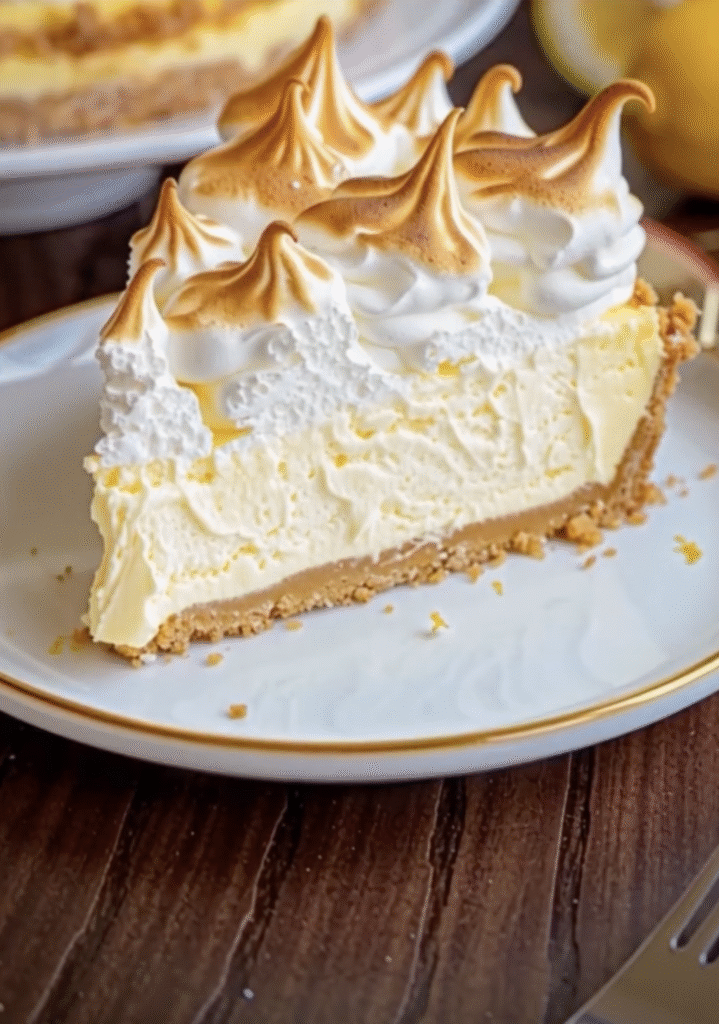
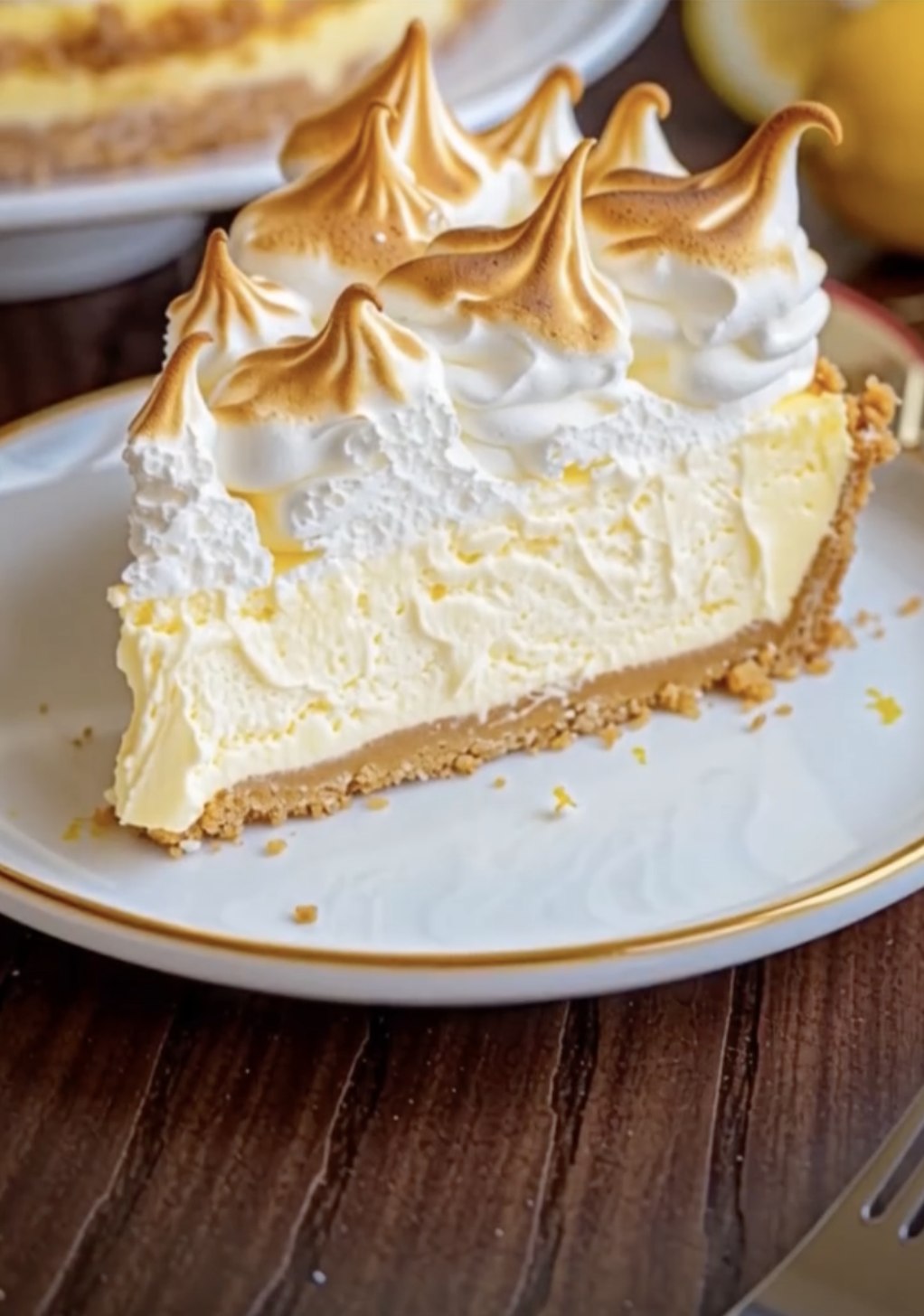
If you love the bright citrus flavor of lemon meringue pie and the creamy richness of classic cheesecake, this Lemon Meringue Cheesecake combines the best of both desserts in one stunning centerpiece. A crisp graham cracker crust supports a silky lemon-infused cheesecake, topped with a smooth layer of lemon curd and crowned with golden, cloud-like meringue. Because each layer adds its own texture and flavor, the cheesecake feels refreshing yet indulgent, perfect for celebrations, holidays, or any moment that calls for a show-stopping dessert.
I first made this cheesecake after wanting something elegant for a spring gathering. Traditional lemon pie felt too light, and a classic cheesecake seemed too rich on its own. Combining the two struck the perfect balance: creamy, tangy, and beautifully bright. Guests immediately requested the recipe, and over time, the dessert became my go-to for special events. The contrast of velvety cheesecake and airy meringue always draws attention, and each slice delivers a blend of sweet, tart, and creamy notes that keeps everyone coming back for seconds.
Why Lemon Meringue Cheesecake Is So Special
A Perfect Balance of Tart and Creamy
This cheesecake works beautifully because the lemon enhances the richness rather than competing with it. Fresh lemon juice and zest bring brightness to the filling, keeping it from feeling heavy. Sour cream adds subtle tang and creates a smooth, velvety texture. The lemon curd layer intensifies the citrus flavor, offering a glossy, flavorful contrast between the dense cheesecake and fluffy meringue.
A Meringue Topping That Elevates the Dessert
Unlike whipped cream, which softens and melts, the meringue adds height, elegance, and structure to the cheesecake. When lightly toasted, the peaks turn golden and caramelized, adding subtle sweetness and visual drama. While the cheesecake chills beneath it, the meringue stays airy, giving each slice a beautiful layered effect you’d expect from a bakery-style dessert.
How Each Layer Contributes to the Final Dessert
Building the Crust
A graham cracker crust creates a sturdy and flavorful base. Mixing the crumbs with sugar and melted butter ensures the crust bakes into a firm, cohesive layer that doesn’t crumble when sliced. Pre-baking the crust helps prevent sogginess once the cheesecake filling is added. Letting it cool before pouring in the batter ensures the filling stays smooth and sets evenly.
Crafting the Cheesecake Filling
Cream cheese at room temperature ensures a lump-free batter. Beating the cream cheese and sugar until smooth lays the foundation for a silky filling. Adding lemon juice, zest, and sour cream infuses brightness without compromising creaminess. A small amount of flour stabilizes the mixture, helping it bake without cracking. Mixing the eggs gently prevents excess air from entering the batter, ensuring a dense, creamy texture.
Baking Techniques for a Perfect Cheesecake
Gentle Baking with Steam
Placing a pan of water in the oven introduces steam, which helps the cheesecake bake evenly and prevents cracking. The edges should be set while the center remains slightly jiggly. This soft center firms during cooling and ensures a velvety final texture. Allowing the cheesecake to rest in the oven after baking reduces temperature shock and minimizes sinking.
Cooling and Chilling for Ideal Texture
A slow cool-down not only prevents cracks but also allows the flavors to meld. Chilling the cheesecake for at least six hours—preferably overnight—creates the firm yet creamy texture that makes cheesecake irresistible. The lemon layer spreads smoothly over the cold surface and adds a burst of flavor that contrasts beautifully with the meringue.
Ingredients
Equipment
Method
- Preheat oven to 350°F. Place a pan of water on the bottom rack. Line a 9-inch springform pan with parchment. Mix graham crumbs, sugar, and butter. Press into base and bake 8–10 minutes. Cool.
- Beat cream cheese and sugar until smooth. Add sour cream, lemon juice, zest, and flour. Mix gently. Add eggs one at a time without overmixing. Pour filling over crust.
- Bake 50–60 minutes until edges set and center jiggles slightly. Turn oven off, crack door, and cool 10–15 minutes. Cool fully on a rack, then refrigerate 6 hours.
- Spread lemon curd over chilled cheesecake. Refrigerate 1 hour.
- Warm egg whites, sugar, and cream of tartar over a double boiler until sugar dissolves. Beat to stiff glossy peaks. Mix in vanilla and spread over cheesecake.
- Torch or broil meringue until lightly golden. Refrigerate until serving.
Nutrition
Notes
Tried this recipe?
Let us know how it was!Layering Lemon and Meringue
Adding the Lemon Curd Layer
Lemon curd provides vibrant citrus flavor and creates a glossy, beautiful surface. Spreading it over the chilled cheesecake ensures clean separation between layers. The curd thickens slightly as it cools again, making slicing easier and giving each bite a bright finish.
Making and Toasting the Meringue
A stable meringue begins with gently heating egg whites, sugar, and cream of tartar until warm and smooth. Beating the mixture into stiff, glossy peaks creates an airy topping that spreads elegantly across the cheesecake. Toasting the meringue adds caramel notes and creates a bakery-quality finish.
Variations and Serving Ideas
Flavor Twists
You can incorporate raspberry swirl into the cheesecake for added brightness, or use Meyer lemons for a softer citrus profile. Lime curd can replace the lemon for a tropical twist. Adding a hint of almond extract enhances the flavor of the crust and pairs beautifully with lemon.
Presentation Tips
A tall meringue with dramatic peaks makes the cheesecake visually stunning. Serve slices with fresh berries, candied lemon slices, or a drizzle of lemon curd for extra flair. Because the cheesecake holds its shape well, it works beautifully for dinner parties and holiday celebrations.
Storage, Make-Ahead, and Troubleshooting
Storing the Cheesecake
The cheesecake keeps well for up to five days in the refrigerator when covered loosely. The meringue may soften slightly but remains stable. For best results, add the meringue close to serving time. If freezing, do so before adding the meringue; the cheesecake and lemon layer freeze well for up to two months.
Preventing Cracks
Using room-temperature ingredients, avoiding overmixing, and baking with steam all help prevent cracks. If a small crack forms, the lemon curd and meringue neatly hide it.
FAQ
Can I make this cheesecake without meringue?
Yes. Serve it as a simple lemon cheesecake or replace the meringue with whipped cream.
Can I use store-bought lemon curd?
Absolutely. It works beautifully and saves time.
How do I know when the cheesecake is done?
The edges should be set and the center should jiggle slightly when gently shaken.
Can I use a water bath instead of steam?
Yes, but wrap the springform pan carefully to prevent leaks.
Can I use graham crackers with added flavors?
Yes. Honey or cinnamon graham crackers work especially well.
Conclusion
Lemon Meringue Cheesecake delivers a stunning combination of textures and flavors: crisp crust, creamy lemon filling, smooth curd, and fluffy toasted meringue. Because the lemon brightens the rich cheesecake and the meringue adds elegance, the dessert feels both refreshing and indulgent. Whether served at holidays, birthdays, or special gatherings, this cheesecake always brings delight and admiration.
Leave a Reply