
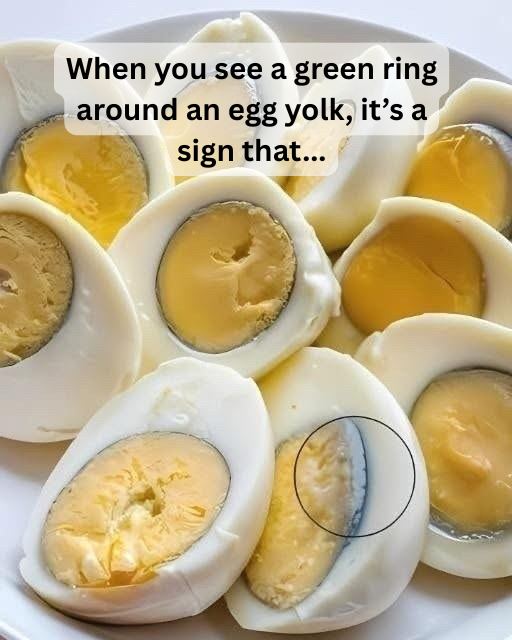
Hard-boiled eggs seem simple—just boil, peel, and enjoy. Yet any home cook has likely experienced the moment of slicing into a freshly cooked egg only to find a dull green or gray ring wrapped around the yolk. It’s not dangerous, but it’s definitely unappealing, especially when preparing deviled eggs, salad toppings, or a platter for guests.
But here’s the good news: this strange discoloration is not a flaw in the eggs, a sign of spoilage, or a reflection of your cooking skills. Instead, it’s a predictable—and completely harmless—chemical reaction triggered by heat, timing, and cooling. Once you understand why it happens, you can easily prevent it every time you make hard-boiled eggs.
This detailed guide breaks down the science behind the green ring, the kitchen mistakes that cause it, and the expert-approved method for achieving perfect sunny-yellow yolks with tender whites—no ring, no strong smells, and no frustration.
What Exactly Is the Green Ring? The Chemistry Behind It
When you boil eggs, several chemical processes occur inside the shell. Most of the time, these reactions result in a creamy yolk and firm white. But if the egg stays too hot for too long, the process changes.
The green ring occurs because of two simple ingredients found naturally in every egg:
• Sulfur — located in the egg white
• Iron — found in the yolk
When an egg is overcooked, sulfur and iron meet at the boundary where the white and yolk touch. There, they combine to form iron sulfide, a natural compound with a muted greenish-gray color.
This reaction:
- Is completely safe
- Has no effect on nutrition
- Doesn’t mean the egg is spoiled
- Doesn’t make the egg unsafe to eat
The only problem? It looks unappetizing. And if the eggs were significantly overcooked, the sulfur smell becomes stronger, creating that familiar “eggy odor” associated with poorly boiled eggs.
Understanding that this is simply chemistry—and not an egg quality issue—makes it much easier to fix.
Why Do Eggs Overcook So Easily?
You may assume that boiling eggs harder or longer will ensure doneness, but eggs are extremely sensitive to heat, especially after reaching the boiling point.
A few common behaviors can cause overcooking:
1. Boiling the eggs at a rolling boil
When the water bubbles aggressively, the egg can heat unevenly and quickly exceed ideal cooking temperatures.
2. Leaving the eggs in hot water too long after cooking
Even when removed from the stove, the hot water continues to cook the eggs internally.
3. Not cooling the eggs immediately
Without rapid cooling, the temperature inside the egg rises, encouraging iron sulfide formation.
4. Using too-high heat from the start
Rapid heating creates uneven cooking and increases sulfur release.
The solution to all of these problems is consistent, controlled heat combined with immediate cooling.
How to Make Perfect Hard-Boiled Eggs Without the Green Ring
This simple, reliable method gives beautifully cooked eggs every time. No guesswork, no fancy equipment, and no discoloration.
⭐ Step 1: Start with Cold Water
Place your eggs in a single layer in a pot, then cover them with cold water. There should be about 1–2 inches (3–5 cm) of water above the eggs.
Starting cold allows heat to rise gradually and evenly, reducing cracking and preventing sudden protein changes.
⭐ Step 2: Heat Slowly and Gently
Bring the pot to a gentle boil over medium heat—not high.
A rolling boil causes the eggs to bang against each other and can lead to:
- Cracks
- Leaking whites
- Overcooking
Once the water reaches a gentle boil, turn off the heat, cover the pot, and remove from the burner.
⭐ Step 3: Let the Eggs Sit — Timing Is Everything
Allow the eggs to rest in the hot water:
- 9 minutes → soft, creamy yolks
- 12 minutes → fully firm yolks perfect for salads, deviled eggs, and snacks
Do not exceed 12 minutes unless you want a guaranteed green ring.
⭐ Step 4: Cool the Eggs Immediately
As soon as the time is up, transfer eggs to an ice bath—a bowl filled with ice and cold water.
Why this step is crucial:
- Stops cooking instantly
- Prevents the iron-sulfur reaction
- Prevents rubbery whites
- Makes peeling easier
Let eggs chill for at least 5 minutes.
⭐ Step 5: Peel With Ease
Tap the egg gently on a hard surface to crack the shell, then peel under running cold water. Water helps separate the shell membrane from the egg white for clean, smooth peeling.
Bonus Tips for Even Better Results
Choose Slightly Older Eggs
Fresh eggs are delicious but extremely difficult to peel. Eggs that are 5–7 days old peel more cleanly because the pH of the white changes as they age.
Add Vinegar or Salt to the Boiling Water
Not essential, but helpful if:
- You’re boiling multiple eggs
- An egg cracks
- You want to improve shell stability
The additions won’t change flavor.
Store Eggs Properly
- Unpeeled: Up to 1 week, refrigerated
- Peeled: 2–3 days in an airtight container
Egg salad made from hard-boiled eggs is great up to 3–4 days.
What Causes the Sulfur Smell?
If your boiled eggs smell particularly strong, it’s the same reaction responsible for the green ring—overcooking. Hydrogen sulfide gas develops naturally when the egg white gets too hot.
Cooling the eggs immediately almost completely eliminates the odor.
Do Brown Eggs Cook Differently Than White Eggs?
No.
Shell color makes no difference in:
- taste
- texture
- cooking behavior
- ring formation
- timing
Green rings happen equally in brown and white eggs.
What If You Already Have a Green Ring?
Don’t worry. Your eggs are:
- safe
- edible
- nutritious
If the appearance bothers you, consider:
- Mashing the eggs for egg salad
- Chopping them into a dish
- Using them in recipes where the yolk isn’t displayed
And next time, remember: cool fast, don’t overcook.
Troubleshooting Common Hard-Boiled Egg Problems
Eggs Crack During Boiling
Causes:
- Heat too high
- Rapid temperature change
- Crowding
Fix:
- Start cold
- Heat gently
- Leave space between eggs
Egg Whites Turn Rubber-Like
Cause: overcooking
Fix: reduce cook time and use an ice bath
Eggs Are Hard to Peel
Cause: eggs too fresh
Fix: use slightly older eggs
Yolks Are Dry or Chalky
Cause: sitting in hot water too long
Fix: cool immediately
Why This Method Works Every Time
Egg proteins are sensitive. Overheat them, and they react. Cool them too slowly, and they continue cooking internally. With this method:
- Temperature rises evenly
- Cooking stops instantly
- Yolks stay bright
- Whites stay tender
- No iron sulfide forms
Professional chefs, food scientists, and culinary schools all rely on the same principles.
Is There Ever a Time When the Green Ring Is Unavoidable?
It may still happen if:
- You’re cooking extremely large eggs
- You’re boiling huge batches (30–50 at once)
- Your water naturally contains high iron levels
But even then, rapid cooling dramatically reduces discoloration.
Final Thoughts: Perfect Hard-Boiled Eggs Are All About Timing
Beautiful, golden-centered hard-boiled eggs don’t require special equipment, chef-level skills, or complicated steps. They only require:
- Starting with cold water
- Not overcooking
- Cooling immediately
Once you follow this straightforward method, the dreaded green ring becomes a thing of the past. Whether you’re prepping snacks, making deviled eggs, or cooking for a crowd, your hard-boiled eggs will look and taste consistently perfect.
Next time you slice open a batch, you’ll see sunny yellow yolks—not a trace of gray or green.
Your salads, sandwiches, and appetizer platters will never look better—and your guests will notice the difference.

Leave a Reply