
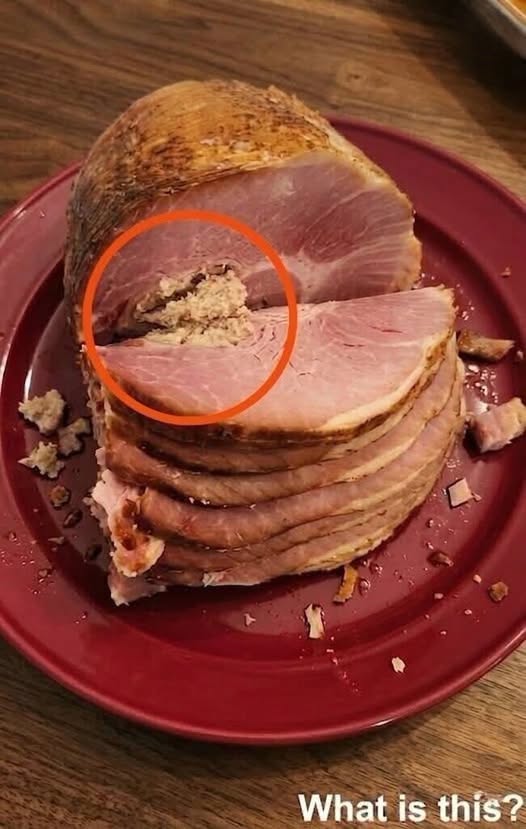
Common Reasons You Might Notice an Unusual Area
Several harmless factors can create noticeable differences inside a ham.
Fat Deposits
Pork naturally contains fat throughout the muscle. Some cuts have concentrated pockets that appear lighter, firmer, or more opaque than the surrounding meat.
Connective Tissue
Bands of connective tissue can feel tougher than surrounding muscle and sometimes appear grayish or whitish when sliced.
Uneven Curing
Commercial curing solutions occasionally distribute unevenly through thicker portions of meat, creating darker or firmer sections.
Muscle Variation
Different muscles within the same cut naturally have different textures and colors.
When an Unusual Appearance May Be a Safety Concern
Although many differences are harmless, there are situations where meat should not be eaten.
Discard processed meat if you notice:
- A sour or unpleasant odor
- Slimy or sticky surfaces
- Green, black, or widespread unusual discoloration
- Mold growth
- Swollen or leaking packaging
- Expired products that have been improperly stored
When several warning signs appear together, spoilage becomes much more likely.
Understanding Food Safety
Food manufacturers operate under strict inspection programs designed to reduce contamination risks. Processing facilities follow sanitation standards intended to minimize bacterial growth and maintain product quality.
Even so, consumers also play an important role in food safety.
Proper handling includes:
- Refrigerating products promptly
- Keeping raw and ready-to-eat foods separate
- Using clean utensils and cutting boards
- Following storage recommendations on packaging
- Observing expiration or "use by" dates
These simple practices significantly reduce foodborne illness risks.
What Should You Do If You Find Something Unusual?
If you discover an unexpected area inside processed meat:
- Stop preparing the food.
- Examine the product carefully.
- Check the expiration date.
- Smell the product without tasting it.
- Photograph the unusual area.
- Save the packaging and lot number.
- Contact the manufacturer or retailer if necessary.
Manufacturers often appreciate reports because they help monitor quality control.
Why Social Media Can Increase Concern
Images of unusual foods spread rapidly online.
Without context, photographs can appear frightening, leading viewers to assume contamination or serious health hazards.
In reality, photographs alone rarely provide enough information to determine whether a product is unsafe.
Factors such as lighting, camera quality, curing differences, natural muscle variation, and slicing angle can dramatically change how food appears.
The Science Behind Cured Meat
Curing changes meat in several important ways.
Salt removes moisture.
Proteins change structure.
Pigments react chemically with curing ingredients.
Water moves through muscle tissue.
These processes improve flavor, preserve quality, and extend shelf life while also changing texture and appearance.
Because biological tissues are naturally variable, cured meat rarely looks identical throughout an entire piece.
Frequently Asked Questions
Can cured ham have darker spots?
Yes. Muscle differences and curing variations may create darker or lighter areas.
Does every unusual spot indicate spoilage?
No. Appearance alone cannot determine food safety.
Should I eat meat if I'm uncertain?
If you have doubts about safety, it's best not to consume the product.
Can fat pockets look unusual?
Absolutely. Fat and connective tissue often appear different from surrounding muscle.
Should I report unusual products?
Yes. Manufacturers and retailers generally encourage customers to report quality concerns.
Tips for Buying High-Quality Ham
When shopping:
- Purchase from reputable retailers.
- Check packaging for damage.
- Verify refrigeration temperatures.
- Review expiration dates.
- Choose products with intact seals.
Proper storage after purchase is equally important.
Final Thoughts
Finding something unusual inside a package of ham can be surprising, but it does not automatically mean the food is dangerous. Many differences in color, texture, or firmness are simply natural variations resulting from muscle structure or the commercial curing process.
At the same time, consumers should remain attentive to clear warning signs such as foul odors, slime, leaking packages, or obvious spoilage. When uncertainty remains, the safest choice is to avoid eating the product and contact the manufacturer or retailer for guidance.
A careful, informed approach allows consumers to separate harmless variations from genuine food safety concerns while reducing unnecessary alarm. Understanding how processed meats are prepared helps explain why appearance alone rarely tells the entire story.

Leave a Reply