
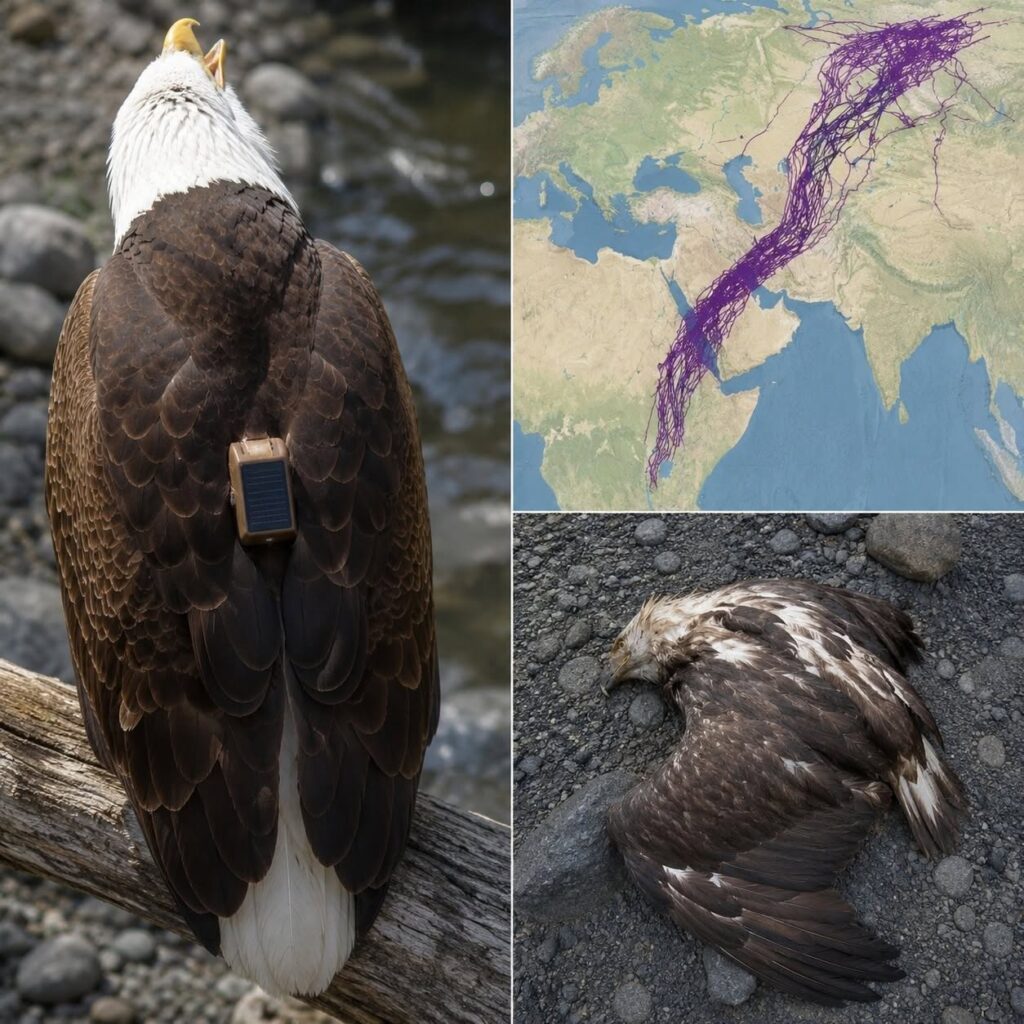
For centuries, eagles have inspired admiration, mystery, and curiosity. Their incredible eyesight, powerful flight, and ability to soar effortlessly across vast landscapes have made them symbols of freedom and strength in cultures around the world.
Yet despite centuries of observation, much about their lives remained unknown until modern technology allowed researchers to follow individual birds over long periods. Thanks to advances in satellite tracking, GPS transmitters, and wildlife conservation research, scientists can now monitor eagles across thousands of miles, revealing migration routes, hunting behavior, nesting habits, and remarkable survival strategies.
Long-term studies spanning decades have transformed our understanding of these magnificent birds. What once appeared to be random wandering has often proven to be highly efficient decision-making shaped by weather, geography, food availability, and instinct refined through evolution.
Why Scientists Track Eagles
Studying wild birds is difficult.
Unlike laboratory animals, eagles travel enormous distances across mountains, deserts, forests, coastlines, and even international borders.
Without tracking technology, researchers could only observe brief moments of their lives.
Today, lightweight GPS transmitters allow scientists to collect information including:
- Flight paths
- Daily travel distances
- Migration timing
- Nest locations
- Hunting territories
- Resting sites
- Seasonal movements
This information helps researchers understand how changing environments affect eagle populations.



Leave a Reply