
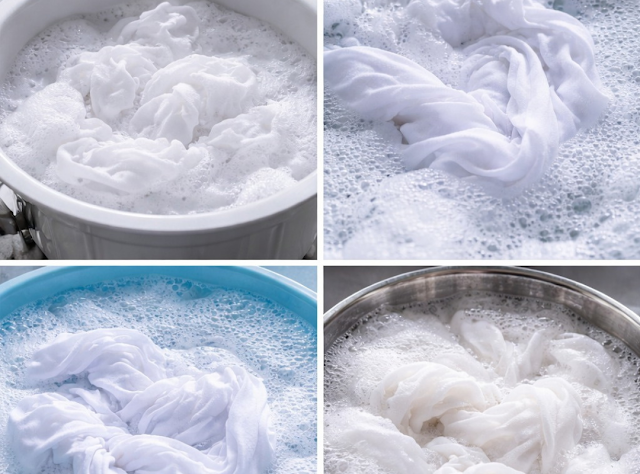
Treat Stains Before Washing
Pre-treatment often determines whether a stain disappears completely or becomes permanent.
Inspect collars, cuffs, underarms, and any visibly stained areas before placing garments into the washing machine.
Liquid laundry detergent or a dedicated stain remover can be gently worked into affected areas. Allowing the product to sit for several minutes before washing often improves stain removal.
For protein-based stains such as sweat or food, avoid very hot water during the initial treatment because heat may set certain stains into the fabric.
The sooner stains are treated, the greater the chance of complete removal.
Choosing the Right Water Temperature
Water temperature plays an important role in cleaning performance.
Warm water generally helps dissolve oils and detergent more effectively than cold water, making it suitable for many white cotton fabrics.
However, delicate materials may require cooler temperatures to prevent shrinking or fiber damage.
Always follow the care label attached to the garment rather than assuming hotter water is always better.
Modern detergents are designed to perform well at lower temperatures, making cold washing an increasingly effective option for many fabrics.
Is Bleach Always the Best Choice?
Bleach has long been associated with bright white laundry, but it should be used carefully.
Chlorine bleach can damage certain fibers, including wool, silk, spandex, and many synthetic blends. Excessive use may weaken fabric strength over time.
In addition, bleach does not remove every type of stain equally well. Some stains actually react poorly with bleach, becoming darker or more difficult to remove.
For this reason, many people reserve chlorine bleach for occasional use on appropriate fabrics rather than relying on it during every wash.
Household Methods People Commonly Try
Over the years, many home remedies have gained popularity for whitening laundry.
These include baking soda, white vinegar, lemon juice, hydrogen peroxide, washing soda, and aspirin.
Each works differently, and none should be considered a universal solution.
Baking Soda
Baking soda can help neutralize odors while slightly boosting detergent performance. It also helps soften water in certain situations.
White Vinegar
White vinegar is commonly used during the rinse cycle to help remove detergent residue and soften fabrics. Once clothes are dry, the vinegar smell disappears.
Hydrogen Peroxide
Hydrogen peroxide acts as a mild oxygen-based bleaching agent and is often gentler than chlorine bleach on appropriate fabrics.
Aspirin
Aspirin is frequently promoted online as a whitening trick because it contains acetylsalicylic acid. Some users report improvements after soaking white garments in dissolved aspirin before washing.
Although this method is popular on blogs and social media, scientific evidence demonstrating significant whitening benefits remains limited. Any improvement is likely to be modest rather than dramatic.
If You Decide to Try Aspirin
If you choose to experiment with aspirin as a household laundry remedy, remember that results vary depending on fabric type, stain age, water quality, and detergent.
Use only plain aspirin rather than coated or flavored tablets.
Dissolve the tablets completely before garments come into contact with the solution to avoid leaving residue on fabric.
After soaking, wash clothing according to its care instructions using your normal detergent.
Avoid expecting overnight miracles. Severely yellowed or permanently stained fabrics may not return to their original brightness regardless of the cleaning method used.
Drying Matters More Than Many People Realize
Improper drying can undo much of the effort invested during washing.
Whenever possible, remove garments promptly after the wash cycle ends. Leaving wet clothes sitting inside the washing machine encourages musty odors and mildew growth.
Sunlight naturally brightens some fabrics, but prolonged exposure may weaken fibers and contribute to fading over time.
Indoor drying or shaded outdoor drying often provides a good balance between freshness and fabric protection.
High dryer temperatures may also set stains that were not completely removed during washing, making them harder to eliminate later.
Preventing Yellowing Before It Starts
Keeping whites bright is easier than restoring them after discoloration occurs.
Several habits can dramatically reduce future staining:
- Wash white garments regularly instead of allowing sweat and oils to build up.
- Avoid excessive detergent.
- Measure detergent according to load size.
- Clean your washing machine regularly.
- Empty pockets before washing.
- Store clothing in cool, dry areas.
- Avoid plastic storage containers that trap moisture for long periods.
These small habits often produce better long-term results than relying on powerful whitening products.
Common Laundry Mistakes
Many people unintentionally shorten the life of their white clothing.
Using too much bleach, overloading the washing machine, ignoring care labels, washing heavily soiled clothes with lightly soiled items, and failing to rinse detergent completely are among the most common mistakes.
Skipping stain treatment is another frequent error. Once stains become heat-set during drying, removing them becomes considerably more difficult.
Frequently Asked Questions
Why do white clothes turn gray?
Graying often results from detergent buildup, hard water minerals, body oils, or washing whites together with darker garments.
Can I wash all white fabrics together?
Not always. Delicate fabrics should generally be separated from heavier materials such as towels or jeans.
Is bleach safe for every fabric?
No. Always check the garment's care label before using bleach.
Does aspirin guarantee whiter laundry?
No. While some people report positive experiences, evidence supporting aspirin as a reliable whitening method is limited. Proper stain treatment, suitable detergent, and correct washing practices usually have a greater impact.
How often should I deep-clean white laundry?
This depends on how frequently the garments are worn. Everyday clothing exposed to sweat may benefit from occasional deep cleaning, while lightly used linens may require less frequent treatment.
Final Thoughts
Bright white laundry isn't achieved through a single miracle ingredient. Instead, it results from consistent care, thoughtful washing habits, prompt stain treatment, and choosing cleaning methods that match each fabric's needs.
While household remedies such as aspirin continue to attract attention, they should be viewed as optional techniques rather than guaranteed solutions. Combining proper sorting, quality detergent, appropriate water temperature, careful drying, and regular maintenance will usually produce the best long-term results.
With a little extra attention during each wash, your favorite white garments can stay fresher, cleaner, and brighter for much longer, helping them look their best every time you wear them.


Leave a Reply