
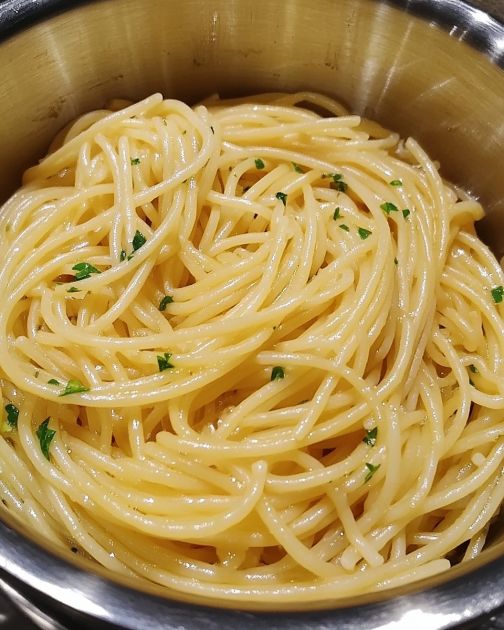
Spaghetti Aglio e Olio: The Italian Classic That Proves Less Is More is a dish that reminds us why Italian cooking has endured for generations. It relies on restraint, patience, and respect for ingredients rather than complexity. With just a few pantry staples, this recipe delivers bold flavor, silky texture, and deep comfort. Although it looks simple on the plate, every step matters, and when done right, the result feels effortless and satisfying.
This dish has a way of fitting into everyday life. It works for a late-night dinner, a quick family meal, or a quiet moment in the kitchen when you want something comforting but not heavy. Because the ingredients are minimal, the technique becomes the star, and that is exactly why this recipe has stood the test of time.
I first learned to appreciate this dish during a phase of cooking when the pantry was nearly empty, and grocery shopping had to wait. With only pasta, garlic, olive oil, and a few dried chili flakes on hand, I made it out of necessity. However, what started as a backup plan quickly became a favorite. The aroma of garlic warming in olive oil filled the kitchen, and the finished bowl felt intentional rather than improvised. Since then, it has become a recipe I return to when I want something reliable, calming, and deeply satisfying without overthinking dinner.
Ingredients
Equipment
Method
- Bring a large pot of salted water to a boil and cook spaghetti until just shy of al dente.
- Warm olive oil in a wide pan over low heat and gently cook sliced garlic until fragrant and lightly golden.
- Add red pepper flakes to the oil and stir briefly to release their flavor.
- Reserve pasta water, then transfer spaghetti directly into the pan with the garlic oil.
- Add a splash of pasta water and toss continuously until the pasta is coated and silky.
- Season with salt, add parsley, toss once more, and serve immediately.
Nutrition
Notes
Tried this recipe?
Let us know how it was!Understanding the Beauty of Simple Italian Cooking
Why Fewer Ingredients Create More Flavor
Spaghetti Aglio e Olio: The Italian Classic That Proves Less Is More succeeds because every ingredient has a clear purpose. There is no competition on the plate. Instead, each component supports the others. Garlic brings aroma and warmth. Olive oil provides richness and body. Pasta delivers structure. Chili flakes add just enough heat to wake everything up.
Because there are so few ingredients, quality matters more than quantity. Good olive oil makes a noticeable difference. Fresh garlic changes the aroma entirely. Even the pasta itself plays a role, since spaghetti holds the oil and starch beautifully. When everything works together, the dish tastes complete without needing anything extra.
Additionally, simplicity allows the cook to focus on timing. Garlic must soften without browning. Oil should warm gently, not fry aggressively. Pasta water becomes an ingredient, not a byproduct. These small decisions create depth without adding complexity.
The Role of Technique Over Complexity
Although the ingredient list is short, the technique demands attention. The oil should never smoke. The garlic should never burn. The pasta must finish cooking in the sauce so it absorbs flavor instead of sitting beneath it. Each step builds on the last.
Because of this, Spaghetti Aglio e Olio: The Italian Classic That Proves Less Is More teaches valuable kitchen skills. It encourages patience, observation, and confidence. Once you master it, many other pasta dishes become known territory.
Essential Ingredients and Smart Substitutions
Choosing the Right Pantry Staples
Spaghetti is the traditional choice, and for good reason. Its shape allows the oil to cling evenly. However, linguine or bucatini can also work if that is what you have on hand. The key is using a long pasta that interacts well with oil.
Garlic should be fresh and thinly sliced. Pre-minced garlic lacks the same aroma and tends to burn quickly. Olive oil should be extra virgin, since it provides most of the flavor. Red pepper flakes add heat, but the amount can be adjusted to taste.
Parsley is optional, yet it adds freshness and color. Salt is essential, especially in the pasta water. Without enough salt, the dish will taste flat no matter how good the oil is.
Adjustments Without Losing Authenticity
Although the traditional version is minimal, small adjustments can still respect the spirit of the dish. A squeeze of lemon can add brightness. A sprinkle of grated cheese can add richness, though it is not traditional. Breadcrumbs toasted in olive oil can add texture.
However, restraint remains important. Too many additions turn this into a different recipe. Spaghetti Aglio e Olio: The Italian Classic That Proves Less Is More works best when it stays focused.
Step-by-Step Cooking Method Explained
Preparing the Pasta and Sauce Together
Start by bringing a large pot of water to a boil. Salt it generously. The water should taste seasoned, since this is the only chance to flavor the pasta itself. Cook the spaghetti until just shy of al dente.
While the pasta cooks, warm olive oil in a wide pan over low heat. Add the sliced garlic and cook gently until fragrant and pale golden. This step should feel calm and controlled. If the garlic browns too quickly, lower the heat.
Add red pepper flakes and let them bloom briefly in the oil. Then, reserve a cup of pasta water before draining the spaghetti.
Bringing Everything Together
Transfer the pasta directly into the pan with the garlic oil. Add a splash of pasta water and toss continuously. The starch in the water helps the oil coat the pasta evenly, creating a silky texture rather than an oily one.
Continue tossing over low heat until the pasta finishes cooking and the sauce clings beautifully. Add more pasta water if needed. Taste and adjust salt. Finish with chopped parsley if using.
Serve immediately. This dish waits for no one, and it is best enjoyed hot.
Common Mistakes and How to Avoid Them
Preventing Burnt Garlic and Greasy Pasta
The most common mistake is cooking garlic over high heat. Burnt garlic turns bitter and ruins the dish. Always start with low heat and take your time.
Another mistake is draining the pasta completely and adding it dry to the pan. Without pasta water, the sauce will not emulsify properly. Always reserve water and use it gradually.
Using too much oil can also overwhelm the dish. The goal is a glossy coating, not a pool at the bottom of the bowl.
Balancing Heat and Flavor
Red pepper flakes should add warmth, not dominate. Start small. You can always add more later. Similarly, salt should enhance, not overpower. Taste as you go.
Spaghetti Aglio e Olio: The Italian Classic That Proves Less Is More rewards careful seasoning and patience.
Frequently Asked Questions
Can I make this dish ahead of time?
This dish is best served immediately. Reheating can cause the oil to separate and the pasta to dry out.
Is cheese traditionally used in this recipe?
Cheese is not traditional, but a small amount can be added if desired.
What olive oil works best?
A good-quality extra virgin olive oil with a mild, fruity flavor works best.
Can I add protein to this dish?
While not traditional, shrimp or anchovies are sometimes added. Keep additions minimal.
Why is pasta water important?
Pasta water contains starch, which helps emulsify the sauce and coat the pasta evenly.
Conclusion
Spaghetti Aglio e Olio: The Italian Classic That Proves Less Is More is proof that great cooking does not require complexity. With attention, quality ingredients, and respect for technique, this dish delivers comfort and confidence in every bite. It is a reminder that simplicity, when done well, never goes out of style.


Leave a Reply