
Traveling abroad often introduces people to unfamiliar foods, languages, customs, and traditions. Yet one of the most unexpected cultural surprises can be found in a place few travelers anticipate: the bathroom.
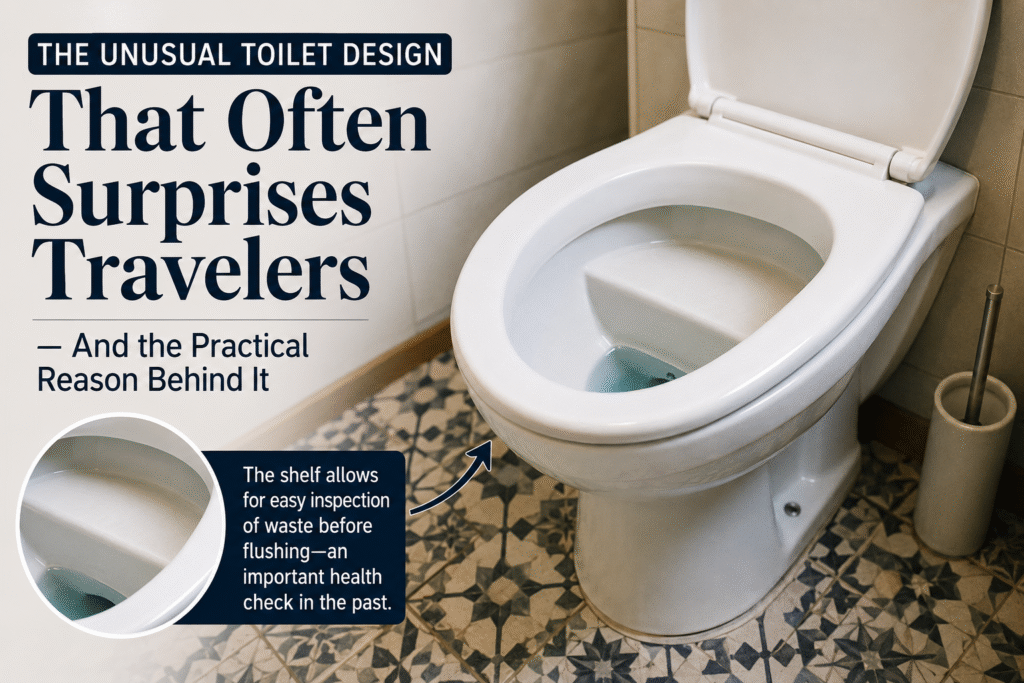
For many visitors exploring parts of Europe, encountering a so-called "shelf toilet" for the first time can be a memorable experience. Unlike modern toilets commonly used throughout North America, South America, Asia, and many other regions, shelf toilets feature a flat porcelain platform positioned above the water level. Rather than dropping directly into water, waste initially lands on this shelf before being flushed away.
To those unfamiliar with the design, the experience can feel strange, outdated, or even uncomfortable. Some travelers react with confusion. Others wonder whether the fixture is broken or improperly designed. However, this unusual bathroom feature was not created by accident. In fact, it emerged from practical concerns related to health, sanitation, and medical observation.
Understanding the history of shelf toilets offers a fascinating glimpse into how societies adapt everyday objects to reflect changing priorities, technologies, and cultural attitudes.
A Design Rooted in Practical Observation
Today, most people take modern plumbing for granted. Toilets are designed primarily for convenience, cleanliness, odor reduction, and efficiency. However, before the development of sophisticated medical diagnostics, ordinary people often relied on visual observation to monitor their health.
For centuries, changes in bodily waste provided important clues about physical well-being.
Physicians and families understood that unusual colors, textures, blood, parasites, or other abnormalities could signal underlying health conditions. Since laboratory testing was unavailable or inaccessible to much of the population, observation became one of the few practical ways to identify potential problems.
The shelf toilet made this process easier.
By preventing waste from immediately disappearing beneath water, the design allowed users to inspect it before flushing. This simple feature gave individuals an opportunity to notice changes that might otherwise go undetected.
In an era when medical knowledge relied heavily on direct examination, this functionality was considered beneficial rather than unpleasant.
The Historical Context Behind the Design
To understand why shelf toilets became popular in certain regions, it helps to examine the broader historical context.
Throughout much of European history, healthcare systems looked very different from those we know today. Doctors often depended on visual clues to diagnose illness. Symptoms that modern medicine now confirms through laboratory testing were frequently identified through direct observation.
Conditions such as:
- Intestinal infections
- Digestive disorders
- Parasitic infestations
- Internal bleeding
- Nutritional deficiencies
could sometimes be detected through changes in stool appearance.
Because of this, bathroom design occasionally incorporated features that supported easier examination.
Countries including Germany, the Netherlands, Austria, Belgium, and parts of Switzerland became particularly associated with shelf toilet installations during the twentieth century. Many residential buildings and public facilities adopted the design because it aligned with prevailing ideas about hygiene and health monitoring.
Although the concept may seem unusual today, it reflected practical concerns of its time.
How Shelf Toilets Actually Work
At first glance, a shelf toilet appears noticeably different from conventional models.
Instead of a deep water-filled bowl positioned directly beneath the user, a raised platform occupies much of the bowl's interior. A smaller pool of water sits toward the front or rear section.
When flushed, water flows across the shelf and carries waste into the drainage system.
The design creates several distinct characteristics:
Easier Visual Inspection
The original purpose remains the most obvious. Users can observe stool before flushing if they choose.
Reduced Water Contact
Because waste does not immediately enter standing water, splashback may be reduced in certain situations.
Different Odor Dynamics
One common criticism involves odor. Since waste remains exposed until flushing, odors may become more noticeable than with modern deep-water designs.
Alternative Cleaning Requirements
Shelf toilets sometimes require additional brushing because waste may leave residue on the platform.
These characteristics have contributed to both supporters and critics over the years.
Why Many Modern Travelers Are Surprised
Travelers often expect bathrooms to function similarly regardless of location.
When they encounter a shelf toilet for the first time, the experience can be unexpectedly memorable.
Several factors contribute to this reaction.
First, many visitors have never seen such a design before. Modern toilet engineering in much of the world prioritizes immediate disposal through standing water.
Second, cultural expectations influence perceptions of cleanliness and comfort. What one society considers practical may seem unusual to another.
Third, travel frequently exposes people to habits and technologies they rarely encounter at home. Bathrooms represent deeply familiar spaces, so even small differences can feel significant.
Many travel forums feature stories from visitors who initially believed shelf toilets were defective. Others report spending several minutes trying to understand their purpose.
Once the historical explanation becomes clear, however, many travelers gain a greater appreciation for the design's origins.
The Evolution of Bathroom Technology
The story of shelf toilets reflects broader changes in plumbing technology and public health.
As engineering improved throughout the twentieth century, manufacturers developed more efficient flushing systems capable of quickly removing waste while minimizing odors and reducing maintenance.
Several innovations transformed bathroom design:
Improved Water Efficiency
Modern toilets use water more effectively than many older systems.
Better Waste Removal
Enhanced bowl shapes and flushing mechanisms increase reliability.
Odor Control
Water barriers help contain unpleasant smells.
Easier Cleaning
Contemporary designs often prioritize smooth surfaces and reduced maintenance.
As these improvements became widespread, many homeowners preferred models that emphasized comfort and convenience over visual inspection.
Gradually, shelf toilets became less common in new construction projects.
The Medical Perspective Then and Now
One reason shelf toilets have declined involves advances in medical science.
Today, healthcare professionals have access to sophisticated diagnostic tools that previous generations could hardly imagine.
Modern medicine includes:
- Laboratory testing
- Imaging technology
- Endoscopy
- Genetic analysis
- Digital health records
- Advanced screening programs
These tools provide far more accurate information than simple visual observation.
Nevertheless, medical experts still encourage individuals to pay attention to significant changes in their health.
Unusual stool color, persistent digestive symptoms, blood, or major changes in bowel habits can remain important warning signs.
The difference is that modern healthcare can now investigate these concerns with far greater precision.
As a result, dedicated bathroom designs for routine observation are no longer viewed as essential by most consumers.
Cultural Differences in Bathroom Design
Bathrooms reveal surprisingly important aspects of culture.
Around the world, toilet designs vary significantly based on local preferences, infrastructure, environmental concerns, and historical traditions.
Examples include:
Squat Toilets
Common in various parts of Asia, Africa, and the Middle East.
Bidet Systems
Popular throughout many European countries and increasingly adopted elsewhere.
Smart Toilets
Widely used in countries such as Japan, featuring advanced technology and automation.
Water-Saving Models
Developed in response to environmental concerns and resource conservation.
Each design reflects different priorities.
Some emphasize hygiene.
Others prioritize water efficiency.
Still others focus on accessibility or user comfort.
Shelf toilets represent another example of how societies adapt everyday fixtures to address specific needs and values.
Why Some People Still Prefer Shelf Toilets
Despite their declining popularity, shelf toilets continue to have supporters.
Some users appreciate their original purpose and value the ability to observe potential health changes.
Others simply grew up with the design and find it familiar.
Supporters often cite benefits such as:
- Easier health monitoring
- Reduced splashback
- Familiarity
- Historical preference
For many individuals, the design remains perfectly functional and requires no replacement.
As a result, shelf toilets can still be found in older homes and buildings across Europe.
Preservation Versus Modernization
Many historic buildings face a common dilemma: whether to preserve original features or modernize them.
Bathrooms are no exception.
Property owners often balance:
- Historical authenticity
- Maintenance costs
- User expectations
- Plumbing requirements
- Renovation budgets
Some choose to replace shelf toilets with contemporary models during renovations.
Others retain them as part of the building's historical character.
This decision reflects broader debates about preserving heritage while embracing modernization.
What Shelf Toilets Teach Us About Society
Perhaps the most interesting aspect of shelf toilets is what they reveal about human priorities.
At one point in history, facilitating health observation was considered important enough to influence the design of a common household fixture.
Later generations prioritized convenience, odor control, and efficiency instead.
Neither perspective is inherently right or wrong.
Rather, each reflects the knowledge, technologies, and concerns of its time.
The evolution of bathroom design demonstrates how ordinary objects continuously adapt alongside social and scientific progress.
Items we rarely think about often carry hidden stories about the people who created and used them.
The Traveler's Perspective
For travelers, encountering unfamiliar bathroom designs offers an opportunity to learn rather than judge.
What initially appears strange frequently has a logical explanation rooted in history or culture.
Shelf toilets remind us that our own assumptions about what is "normal" are often shaped by where we grew up and what we have experienced.
Travel expands those perspectives.
A surprising toilet design may seem like a small detail, yet it can open the door to fascinating discussions about medicine, engineering, public health, and cultural evolution.
Conclusion
The shelf toilet may surprise modern travelers, but its existence is rooted in practical concerns that once played an important role in everyday health monitoring. Long before advanced diagnostic technologies became available, visual observation provided valuable information about physical well-being, and bathroom fixtures reflected that reality.
Although contemporary toilet designs now dominate much of the world due to their convenience, efficiency, and comfort, shelf toilets remain a fascinating reminder of how medical understanding and technological innovation shape even the most ordinary aspects of life.
What many visitors initially view as an odd curiosity is actually a small piece of social history. Its continued presence in certain buildings serves as a quiet testament to changing attitudes about health, sanitation, and daily living.
The next time you encounter an unfamiliar fixture while traveling, it may be worth pausing before dismissing it as outdated. Often, the most ordinary objects have the most interesting stories to tell.


Leave a Reply