
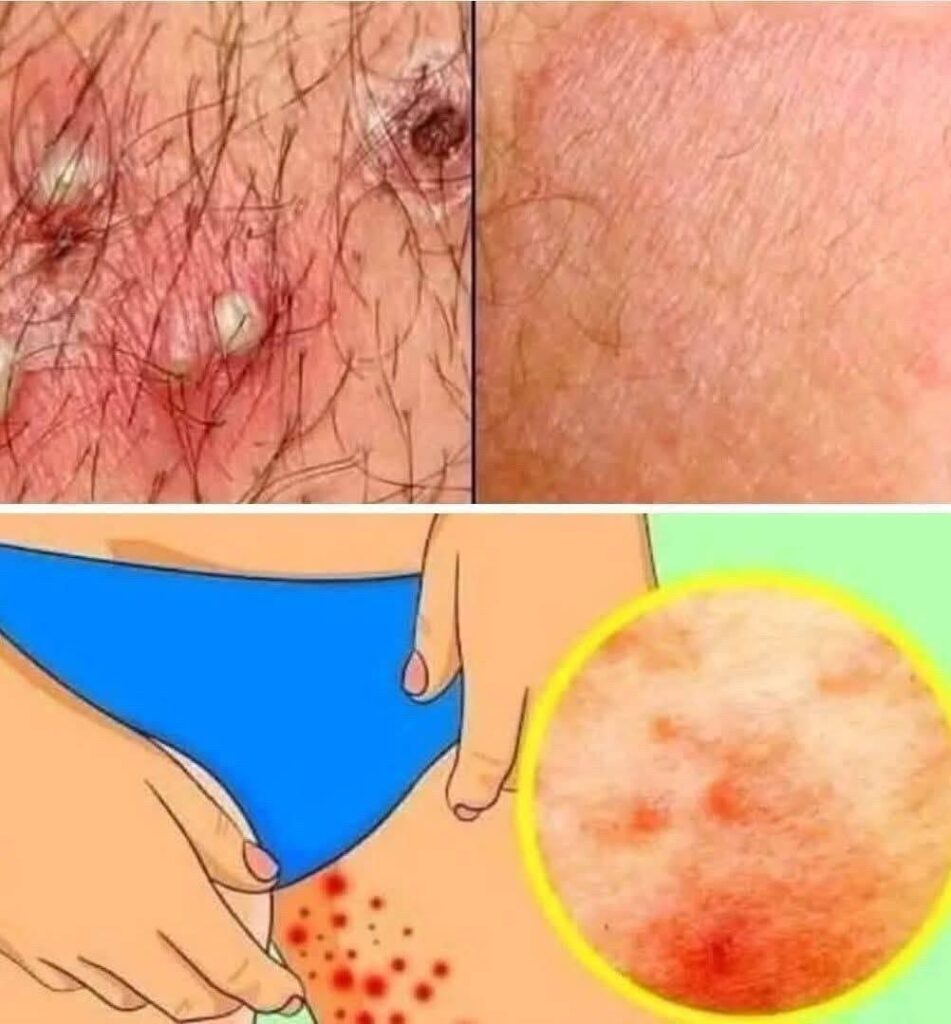
Common Signs and Symptoms
An ingrown hair usually begins as a tiny bump before becoming more noticeable over the next few days.
Typical symptoms include:
Small Red Bump
The first sign is often a small raised spot that resembles a pimple.
Tenderness
The area may hurt when touched or rubbed against clothing.
Itching
Many people notice itching before pain develops.
White or Yellow Center
Some bumps develop a small pus-filled center.
Visible Hair
Sometimes you can actually see the trapped hair curled beneath the skin.
Mild Swelling
The surrounding skin often becomes slightly swollen.
Ingrown Hair or Something Else?
Many skin conditions can produce similar-looking bumps.
Folliculitis
Folliculitis occurs when the hair follicle becomes inflamed, often because of bacteria, yeast, or irritation.
Unlike a single ingrown hair, folliculitis often appears as clusters of small red or white bumps.
Razor Burn
Razor burn usually causes widespread redness and tiny irritated bumps shortly after shaving.
It often improves within a day or two.
Boils
Boils tend to be larger, deeper, and much more painful.
They develop when bacteria infect deeper layers of the skin.
Cysts
A cyst usually feels like a firm lump beneath the skin and may persist for weeks or months.
Sexually Transmitted Infections
Certain sexually transmitted infections can also produce bumps in the genital area.
Because appearances can overlap, persistent sores, blisters, ulcers, or unusual discharge should always be evaluated by a healthcare provider.
Why Ingrown Hairs Happen After Shaving
Shaving cuts hair at a sharp angle.
As the hair begins growing again, the pointed tip can curve sideways instead of upward.
People with curly or coarse hair are especially susceptible because the hair naturally bends back toward the skin.
Shaving too closely increases the risk even more.
Using dull razors, shaving against the direction of hair growth, or stretching the skin while shaving can all contribute.
Safe Ways to Treat an Ingrown Hair at Home
Most ingrown hairs improve without aggressive treatment.
Apply a Warm Compress
Place a warm, damp washcloth over the bump for 10–15 minutes several times daily.
Heat helps soften the skin and encourages the trapped hair to move toward the surface.
Keep the Area Clean
Wash gently with mild soap and warm water.
Avoid harsh scrubbing.
Wear Loose Clothing
Reducing friction helps decrease irritation.
Loose cotton underwear often feels much more comfortable while the area heals.
Pause Hair Removal
Avoid shaving or waxing until the skin has fully recovered.
Continuing to remove hair often worsens inflammation.
Gentle Exfoliation
Once tenderness decreases, very gentle exfoliation with a soft washcloth may help remove dead skin cells that trap hairs.
Avoid aggressive scrubbing.
What You Should Never Do
Many people instinctively squeeze or pop these bumps.
Unfortunately, this usually makes things worse.
Avoid:
- Picking
- Digging with tweezers
- Popping the bump
- Using needles at home
- Scratching repeatedly
These actions increase the risk of infection and scarring.
When Should You See a Doctor?
Although most ingrown hairs heal on their own, medical care may be necessary if you notice:
- rapidly increasing redness
- severe pain
- fever
- spreading swelling
- large amounts of pus
- repeated infections
- symptoms lasting longer than two weeks
A healthcare professional can determine whether antibiotics or other treatments are needed.
How to Prevent Ingrown Hairs
Prevention is usually easier than treatment.
Helpful habits include:
Shave After a Warm Shower
Warm water softens hair and opens pores.
Use a Sharp Razor
Replace blades regularly.
Shave With the Grain
Follow the natural direction of hair growth.
Avoid Stretching the Skin
Stretching creates an extremely close shave that increases the chance of trapped hairs.
Moisturize Afterwards
Keeping skin hydrated reduces irritation.
Exfoliate Regularly
Removing dead skin helps prevent blocked follicles.
Is Waxing Better Than Shaving?
Neither method completely eliminates the possibility of ingrown hairs.
Waxing removes hair from the root, which means regrowth takes longer.
However, new hairs can still become trapped.
Some people experience fewer ingrown hairs after waxing, while others find shaving causes less irritation.
The best method depends on individual skin type and hair texture.
Frequently Asked Questions
Are ingrown hairs dangerous?
Usually not. Most resolve within several days or weeks with proper care.
Can an ingrown hair become infected?
Yes. Bacteria can enter irritated skin, causing redness, swelling, and pus.
Should I squeeze the pus?
No. Squeezing increases inflammation and infection risk.
Can I exercise?
Yes, although friction may temporarily increase discomfort. Wearing breathable clothing can help.
Why do I keep getting them?
Recurring ingrown hairs often result from shaving habits, curly hair, friction, or blocked follicles.
Final Thoughts
Finding a painful bump in the groin can feel frightening, especially if you've never experienced one before. Fortunately, many of these bumps turn out to be simple ingrown hairs or irritated hair follicles that improve with gentle home care and a little patience.
The most important thing is to resist the urge to squeeze or pick at the area. Instead, keep the skin clean, apply warm compresses, and allow the hair to work its way naturally to the surface. If symptoms worsen, become unusually painful, or fail to improve after a couple of weeks, don't hesitate to seek medical advice.
Your skin goes through a lot every day—from friction and sweat to shaving and tight clothing—and occasional irritation is common. With good skincare habits and careful hair removal techniques, you can greatly reduce the chances of future ingrown hairs while keeping your skin healthy and comfortable.
Remember, this article is intended for general educational purposes and should not replace personalized advice from a qualified healthcare professional. If you're ever uncertain about a skin lesion or notice changes that concern you, getting it evaluated is the safest course of action.
Leave a Reply