
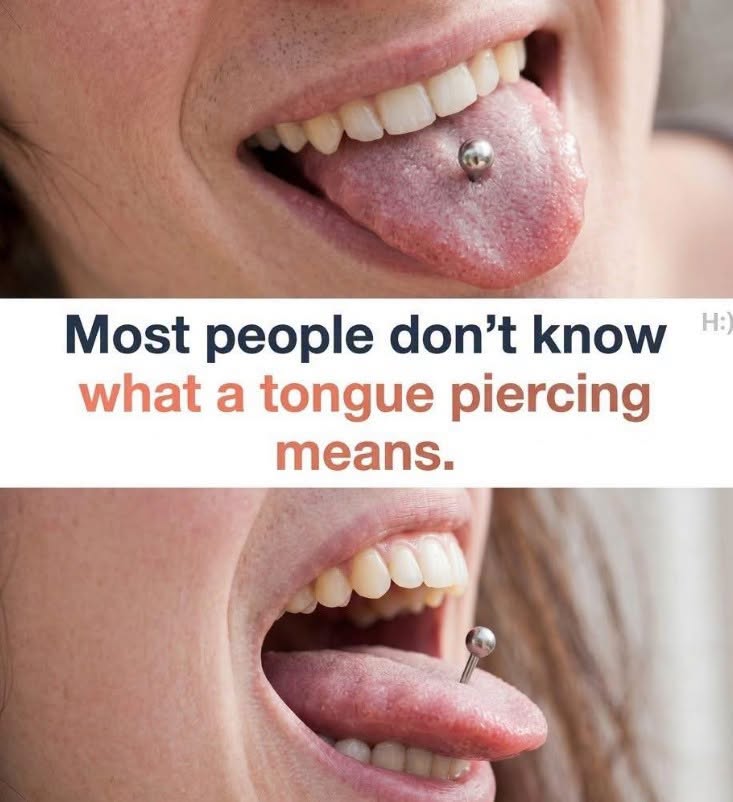
A small piece of jewelry positioned at the center of the tongue may seem like a modern fashion statement, but its history stretches back centuries and carries far more meaning than many people realize. For some individuals, a tongue piercing represents self-expression and individuality. For others, it serves as a symbol of personal freedom, confidence, or cultural identity. While it has become a common body modification in many parts of the world, few people know the fascinating story behind its origins or understand the various meanings it has carried throughout history.
Today, tongue piercings are visible in fashion, music, entertainment, and everyday life. They have moved from niche subcultures into mainstream acceptance. Yet despite their popularity, misconceptions and myths continue to surround them. Some view them purely as a trend, while others associate them with deeper symbolism.
The reality is far more interesting. The history of tongue piercings combines spirituality, ritual practices, personal identity, rebellion, art, and modern self-expression. Understanding where this practice comes from reveals how a seemingly small piece of jewelry can carry significant cultural and personal meaning.
Ancient Origins: More Than Decoration
Most people assume tongue piercings are a relatively recent invention. However, historical evidence suggests that forms of tongue piercing existed long before modern body modification culture emerged.
Among ancient Mesoamerican civilizations, particularly the Maya and Aztec peoples, ritual bloodletting played an important spiritual role. Historical records and archaeological findings indicate that religious leaders and members of the elite sometimes pierced parts of their bodies during ceremonial practices.
These rituals were not performed for beauty or fashion.
Instead, they were considered sacred acts designed to facilitate communication with divine forces. Blood was viewed as a powerful offering capable of connecting the physical and spiritual worlds.
The tongue held special significance because it was associated with speech, prayer, and communication. Piercing the tongue during religious ceremonies symbolized sacrifice, devotion, and spiritual connection.
For these ancient cultures, the body was not separate from spiritual life. Physical actions often carried profound symbolic meaning.
Although modern tongue piercings no longer serve these ritual purposes, their historical roots remain an important part of their story.
The Symbolism of Speech and Communication
One reason the tongue became significant in many cultures relates to its connection with communication.
Throughout history, speech has been associated with power.
Words can inspire, comfort, persuade, teach, or harm. Many spiritual traditions emphasize the importance of speaking truthfully and responsibly.
Because the tongue plays a central role in communication, modifying it sometimes carried symbolic meaning beyond physical appearance.
Some interpretations suggest that tongue piercing represented:
- Personal truth
- Spiritual expression
- Inner strength
- Courage
- Commitment
- Transformation
Even today, some individuals choose tongue piercings because they view them as symbols of finding their voice or expressing their authentic selves.
While not everyone assigns symbolic significance to the piercing, the association between the tongue and communication continues to influence how many people interpret this form of body modification.
The Evolution Into Modern Culture
The modern tongue piercing movement emerged largely during the late twentieth century.
As body modification gained popularity in alternative communities, people began exploring piercings beyond traditional ear jewelry.
Tattoo culture, punk movements, artistic communities, and self-expression trends all contributed to the growing acceptance of nontraditional piercings.
During the 1970s and 1980s, professional body piercing studios became increasingly established in Western countries.
As safety standards improved and information became more accessible, tongue piercings gained popularity among individuals seeking unique forms of self-expression.
Unlike highly visible facial piercings, tongue piercings offered an interesting balance.
They could remain hidden during professional situations while still serving as a meaningful personal statement.
This combination of discretion and individuality contributed significantly to their appeal.
A Symbol of Personal Identity
One of the most common reasons people choose tongue piercings today is personal identity.
Human beings naturally seek ways to express who they are.
Clothing, hairstyles, tattoos, jewelry, and piercings all serve as forms of personal communication.
A tongue piercing often reflects a desire to stand out while maintaining a degree of privacy.
Unlike a visible tattoo or facial piercing, it remains largely hidden unless the wearer chooses to reveal it.
For many people, this creates a sense of ownership over their identity.
The piercing becomes something personal rather than performative.
Some individuals describe their tongue piercing as representing:
- Independence
- Confidence
- Authenticity
- Self-discovery
- Freedom
- Individuality
The meaning varies from person to person, making each experience unique.
Challenging Social Expectations
Throughout history, body modification has often been linked to challenging social norms.
Whenever society establishes expectations about appearance, some individuals choose to question or redefine those expectations.
Tongue piercings have occasionally served this role.
In certain environments, they have been viewed as unconventional or rebellious.
For some wearers, this perception becomes part of the appeal.
Choosing a tongue piercing may represent a willingness to embrace personal choices regardless of social judgment.
However, modern attitudes have changed significantly.
What once appeared shocking or controversial is now widely accepted in many communities.
As acceptance has grown, the symbolism of rebellion has gradually shifted toward broader themes of self-expression and personal freedom.
Cultural Perceptions Around the World
Attitudes toward tongue piercings vary across cultures.
In some societies, body modification is deeply integrated into cultural traditions.
In others, it remains relatively uncommon.
Globalization and social media have contributed to the spread of piercing culture across international boundaries.
As a result, people increasingly encounter diverse perspectives regarding body modification.
Some cultures emphasize personal freedom and self-expression.
Others place greater importance on traditional appearance standards.
These differences influence how tongue piercings are perceived and understood.
Despite varying opinions, one common theme appears repeatedly: body modification often serves as a reflection of personal identity rather than a simple fashion choice.
Myths and Misconceptions
Tongue piercings have attracted numerous myths over the years.
Some assumptions are based on stereotypes rather than facts.
One common misconception is that every person with a tongue piercing shares the same motivations.
In reality, motivations vary widely.
Some choose the piercing for aesthetic reasons.
Others appreciate its symbolism.
Many simply enjoy the appearance.
Another misconception is that tongue piercings always indicate membership in a specific social group or subculture.
While certain communities helped popularize them, tongue piercings have become mainstream enough that they no longer carry a single universal meaning.
Assumptions about someone's personality based solely on body modifications are often inaccurate.
Individual experiences differ significantly.
The Psychological Appeal of Body Modification
Researchers studying body modification often highlight its connection to identity formation.
People frequently modify their appearance during periods of personal growth or transition.
A tongue piercing may symbolize:
- A new chapter in life
- Recovery from challenges
- Increased confidence
- Personal transformation
- Independence
The act of choosing a body modification can itself feel empowering.
It represents intentional control over one's appearance and self-presentation.
For many individuals, this sense of agency contributes significantly to the piercing's meaning.
The jewelry becomes a reminder of personal decisions, experiences, and values.
The Importance of Safety and Professional Care
While cultural and symbolic meanings are fascinating, practical considerations remain important.
Tongue piercings involve oral tissue and therefore require proper care.
Professional piercing studios follow hygiene standards designed to minimize risks.
Individuals considering a tongue piercing should seek qualified professionals who use sterile equipment and provide detailed aftercare instructions.
Proper care generally includes:
- Maintaining oral hygiene
- Following cleaning recommendations
- Avoiding unnecessary irritation
- Monitoring healing progress
- Attending follow-up appointments when necessary
Responsible practices help ensure positive outcomes and reduce complications.
How Meanings Continue to Change
Like many forms of self-expression, the meaning of tongue piercings continues evolving.
Symbols rarely remain fixed.
Their significance changes as cultures change.
What once represented spiritual devotion later became associated with alternative communities.
Today, it may symbolize individuality, confidence, creativity, or personal style.
Future generations may assign entirely different meanings.
This flexibility reflects one of the most fascinating aspects of cultural symbols.
They adapt to new contexts while retaining connections to their historical roots.
Tongue piercings illustrate how traditions can evolve without disappearing completely.
The Relationship Between Appearance and Identity
The popularity of tongue piercings also reflects a broader human desire to align external appearance with internal identity.
People often seek ways to communicate who they are without speaking.
Body modification serves this purpose effectively.
A piercing may act as a personal statement, a conversation starter, or a reminder of important life experiences.
Although outsiders may focus primarily on appearance, wearers frequently attach deeper significance to their choices.
This difference between external perception and personal meaning highlights the complexity of body modification culture.
Why People Continue Choosing Tongue Piercings
Despite changing trends, tongue piercings remain popular because they offer several unique advantages.
They are:
- Relatively discreet
- Highly customizable
- Rich in symbolism
- Associated with self-expression
- Adaptable to different styles
For many individuals, the combination of visibility and privacy creates a perfect balance.
The piercing remains personal while still contributing to self-expression.
This dual nature helps explain its enduring appeal.
Conclusion
Tongue piercings represent far more than a simple fashion trend. Their origins stretch back to ancient civilizations where they played roles in spiritual rituals and symbolic practices. Over time, their meaning evolved, transforming from sacred ceremony into a powerful form of personal expression.
Today, people choose tongue piercings for many reasons, including identity, confidence, creativity, independence, and individuality. While cultural interpretations vary, one theme remains consistent: the desire to express something meaningful about oneself.
Whether viewed as art, tradition, symbolism, or self-expression, the tongue piercing continues to fascinate because it combines history, culture, and personal identity in a remarkably small yet powerful form. What appears to be a simple piece of jewelry often carries a story far deeper than most people realize.


Leave a Reply